Thursday, July 21, 2005

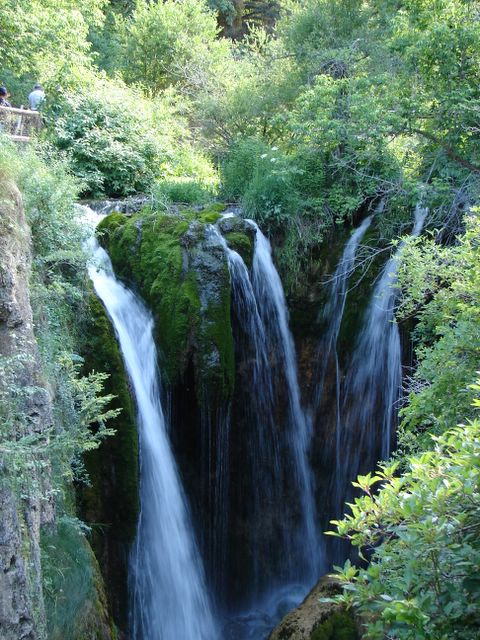
Roughlock Falls in Spearfish Canyon, SD.

Greenscape Gardens
Mount Rushmore. Did you realize that Washington's nose is over 21 feet long, the other presidents are only 20 feet.

Greenscape Gardens
Sculptures at Tatanka--Kevin Costner's tribute to the Bison in the Black Hills

Greenscape Gardens
Let the stress begin

Greenscape Gardens
THE OLD SIGN PHILOSOPHER, THOUGHT FOR THE DAY!

GREEN ME UP........SCOTTY

xxxxxxxxxxxxxxxxxxxxxxxxxxxxxxxxxxxxxxxxxxxxxxxxxxxxxxxxxxxxxxxxx

Lawns that are heavily shaded can sometimes develop a white color on the grass blades, as if they have been dusted by powder. This is due to powdery mildew, a common fungal disease favored by cool, humid weather and shady conditions.

Greenscape Gardens have several fungicide products to help control powdery mildew.

xxxxxxxxxxxxxxxxxxxxxxxxxxxxxxxxxxxxxxxxxxxxxxxxxxxxxxxxxxxxxxxxxxxxxxxx

Mosquitoes are a summer problem.

Sitting in the back yard was a test of nerves tonight. Mosquitoes were constantly dive bombing me to the point that I simply had to go inside. The irritation of their pesky bite or the health problems incurred by mosquitoes was also a deciding factor. Several mosquito species are capable of transmitting viruses or other organisms that cause diseases in humans and animals.

Biology

Mosquitoes are small, aquatic flies that belong to the family Culicidae. Only adult female mosquitoes take a blood meal. The blood is needed for egg development. Mosquito species vary in the types of blood they prefer, but most species prefer warm-blooded animals. Most of the rest feed on cold-blooded animals, but a few do not take blood at all. Females of these species feed on plant juices and nectar. Plant juices are also the food for males of all species. A few bloodsucking species are active during daylight hours, but the majority of the species that prefer human blood are most active at twilight or just after dark.

Mosquitoes develop in slow-moving or stagnant water. Places where mosquitoes grow and develop are commonly referred to as "breeding sites." The type of breeding site varies by species, but some of the most common include flood waters, woodland pools, edges of slow-moving streams, ditches, marshes and around the edges of lakes. Mosquitoes may also develop in tree cavities, rain barrels, fishponds, birdbaths, wading pools, old tires, tin cans, clogged gutters and catch basins Ñ in other words, anything that holds even small amounts of water for a few days.

Adult female mosquitoes lay eggs on the surface of water, or in places where water is likely to accumulate. After coming into contact with water, eggs usually hatch in about three days. The larval stage, commonly called a wiggler, usually takes 7 to 10 days to mature and then changes into the pupal or "tumbler" stage. The larval and pupal stages live at the surface of the water and breathe through tiny air tubes that protrude from the water surface, much like a snorkel. The pupal stage lasts two or three days, before the adults emerge. Adult mosquitoes emerge from the pupae by climbing onto the surface of the water. After a few days, the adults mate and females begin looking for a blood meal. After taking a blood meal, each female may lay 100 to 400 eggs or more. The entire life cycle is completed in about two weeks but may take only 10 days under the most favorable conditions.

Missouri is home to approximately 50 species of mosquitoes. Not all of these species are found throughout the state, but many are adapted to survive the hot summers and cold winters typical of Missouri. Some species are active in the spring, some in the summer, and others in the fall, while others are present during the entire nonfreezing portion of the year.

Warning
• Apply chemicals only where needed or justified.
• Before using any chemical, please read the label carefully for directions on application procedures, appropriate rate, first aid, storage, and disposal.
• Make sure that the chemical is properly registered for use on the intended pest and follow all other label directions.
• Keep insecticides in original containers, complete with labels, and keep them out of the reach of children and pets.
• Do not allow children or pets near treated areas before these areas dry.
• Carefully and properly dispose of unused portions of diluted sprays and empty insecticide containers.

Disease transmission

The fact that insects can transmit disease has been known for only a little over 100 years. Before then, it was not known how people contracted malaria, yellow fever, typhus, dengue, filariasis or encephalitis. We now know that mosquitoes transmit various diseases in North America and throughout the world. Depending on the species of mosquito, they may transmit pathogens from human to human, animal to animal, animal to human or human to animal.

Normally, mosquitoes acquire a pathogen from an infected host while taking a blood meal. Once inside the mosquito host, the pathogen must survive until it is transmitted to a susceptible host during a later blood meal. Mosquitoes salivate each time they feed, and transmission usually results from this saliva. Therefore, to be transmitted, the pathogen must survive digestion, pass through the mosquito gut and into the tissues, multiply in the tissues, and finally accumulate in the salivary glands of the mosquito. Since pathogens are adapted for survival and development in certain mosquitoes, only select species are able to transmit a particular disease.

Encephalitis viruses are some of the most widely recognized mosquito-transmitted pathogens. The name encephalitis describes the swelling of the brain and spinal cord that can result from an infection by these viruses. One strain of encephalitis virus, called St. Louis encephalitis (SLE), was named because of its discovery in the St. Louis area. Other encephalitis viruses include eastern equine encephalitis (EEE), western equine encephalitis (WEE), and West Nile virus (WNV). WNV has only recently become established across North America and affects birds, horses and humans. It is primarily a transmitted from bird to bird, with horses and humans being accidental hosts. Most humans with WNV have no symptoms. A small percentage of infected people develop flu-like symptoms, and encephalitis develops in less than 1 percent of those who show symptoms. The elderly are most susceptible to encephalitis from WNV. After recovery from WNV is complete, immunity guards against future infections.

Another common pathogen transmitted by mosquitoes is canine heartworm. Canine heartworm is caused by the filarial worm Dirofilaria immitis. It is by far the most important filarial worm transmitted by mosquitoes in North America. It is most common along the Atlantic and Gulf coasts, where in some localities half the dogs examined are found to be infected. Lower infection rates are found in the Midwest and North-central states. Humans can be accidental hosts but these infections are usually abortive.

Breeding site elimination

The most effective method of mosquito control around the home is to prevent the larvae and pupae from developing. This can be done by eliminating or altering existing breeding sites as follows:
• Destroy or dispose of tin cans, old tires or any other unnecessary water containers.
• Make weekly inspections of the water in flowerpots and plant containers. If mosquito larvae are seen, change the water.
• Change the water in birdbaths and wading pools once or twice a week. Turn wading pools upside down when not in use.
• Stock garden and lily ponds with top-feeding minnows.
• Keep rain gutters unclogged and flat roofs dry.
• Drain and fill stagnant pools, puddles, ditches or swampy places around the home.
• Keep the margins of small ponds clear of vegetation.
• Place tight covers over cisterns, cesspools, septic tanks, fire barrels, rain barrels and tubs where water is stored.
• Fill all tree holes with sand, then seal with mortar.
• Remove tree stumps that may hold water.

Outdoor larval mosquito control

If standing water can't be eliminated, and you have observed mosquito larvae or pupae in the water, there are treatments designed to control these stages. Because mosquito larvae and pupae "hang" under the surface tension of the water while breathing, a thin coat of light oil on the water breaks the surface tension and prevents breathing. These oils should be applied to the shallow margins of the water where there is emergent vegetation, since most of the larvae are located there. They may also be applied to the upwind side of the water so that air currents move the film of oil across the surface. Use only light oils specifically designed for this purpose. Mosquito control supply companies sell such products. Never apply used crankcase oil for this purpose.

Mosquito repellents

Repellents are useful in protecting against mosquito bites. Available under various trade names, most contain the active ingredient diethyl toluamide (DEET). Repellents provide protection for up to five hours, depending on amount of perspiration, skin rubbing, temperature and abundance of mosquitoes. Protection is rarely 100 percent when one is exposed to a heavy mosquito population. Application should be made to clothing and to exposed skin areas but not around the eyes, nose or lips. Follow carefully all directions on the label. Because repellents with high concentrations of DEET can damage plastics and some synthetic fibers, newer formulations contain about 30 percent microencapsulated repellent. Research has also shown that DEET concentrations above 35 percent are not significantly more effective at repelling mosquitoes.

Other materials may be useful as mosquito repellents. So-called mosquito coils are designed to burn slowly and emit a pungent odor that may keep small spaces temporarily mosquito-free. Avon's Skin-So-Soft products are reported to have some effect in repelling mosquitoes. Other products claiming repellency may or may not be effective.

Indoor control of adults

Mosquitoes can be prevented from entering homes by keeping windows and doors tightly screened. Make sure all exterior screening is in good repair and used regularly. Reduced outdoor lighting at night will also make your home less susceptible to mosquitoes. Similarly, outdoor dog kennels can be screened and lighting reduced.

Space sprays or aerosol "bombs" containing synergized pyrethrins or pyrethroids (several are on the market with various names, usually ending in -thrin ) are effective against mosquitoes found in the home. Use these materials only as directed on the label.

Outdoor control of adults

Adult mosquitoes are attracted to light and may migrate in from surrounding areas. During the daytime, adults like to rest in cool, dark, damp and protected locations, such as in vegetation. Therefore, do not allow grass or weeds to grow uncontrolled near the home. Keep shrubs and bushes trimmed and with a space between them and the house. Some localized protection can be obtained by spraying this shrubbery and other shaded areas around buildings with a residual insecticide to kill mosquitoes that attempt to pass the day there. For this purpose you may use an appropriately labeled aerosol insecticide. Some of the active ingredients include carbaryl, malathion and various pyrethroids (again, these ingredients usually end in Ðthrin). Other products on the market are for use only by licensed applicators. Read the insecticide label before applying to make sure the product is used according to the guidelines and will not harm vegetation to which it is applied.

Temporary control can be achieved with a thermal fogger, a small, hand-held machine that converts a liquid insecticide into a thermal fog. Such a fog will drift with air currents across the ground and through vegetation, providing for quick knockdown of flying and resting adult mosquitoes. This type of control is most effective just before sunrise and just after sundown, when temperatures are cool and when air currents are minimal. Be sure to use only insecticides prepared for use in a thermal fogger. This sort of control may also be useful when outdoor events or gatherings are planned. Since this type of control is short-lived, make the application no more than a few minutes before relief is desired.

Pets

It may be desirable to protect your dog from mosquito bites to reduce the threat of infection with canine heartworm. Screening outdoor kennels is one method that has been used to minimize mosquito bites. Another alternative is to contact your local veterinarian, who can prescribe insecticidal treatments for mosquito control on dogs. These products are spot-on, which means you apply a few drops between the shoulder blades or on the back of your dog. The chemical moves through the oils of the skin to provide protection on all areas of the body. These products typically persist for up to a month and kill or repel biting mosquitoes.

Electronic devices

"Bug zappers" are advertised as physical attractants or repellents of mosquitoes. Field tests have consistently shown that electrocuting devices using ultraviolet light as an attractant are ineffective in reducing mosquito populations and mosquito biting activity in a given area. They may be spectacular in killing mosquitoes and other insects but they also attract mosquitoes that would not have been in the area normally. Since these electrical devices never get all the mosquitoes present, there will probably be as many mosquitoes left in an area as would have been there if the attracting device had not been used in the first place. In addition, studies have shown that they kill more beneficial insects than mosquitoes and harmful insects.

"Ultrasonic pest eliminators" that supposedly emit a sound or other phenomenon to repel mosquitoes from an area appear on the market from time to time. There is no scientific evidence that such devices have any significant effect on mosquito behavior.

Thursday, July 07, 2005

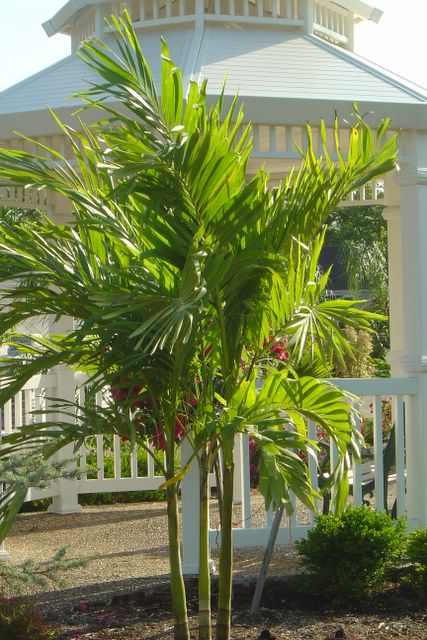
PALM TREES AND TROPICAL PLANTS ON SALE FOR HALF PRICE! SORRY, THIS PALM STAYS IN THE DOUGHERTY FERRY DISPLAY GARDEN.

Greenscape Gardens
ALL PALM TREES ON SALE FOR THE NEXT 10 DAYS AT 50% OFF.

Greenscape Gardens
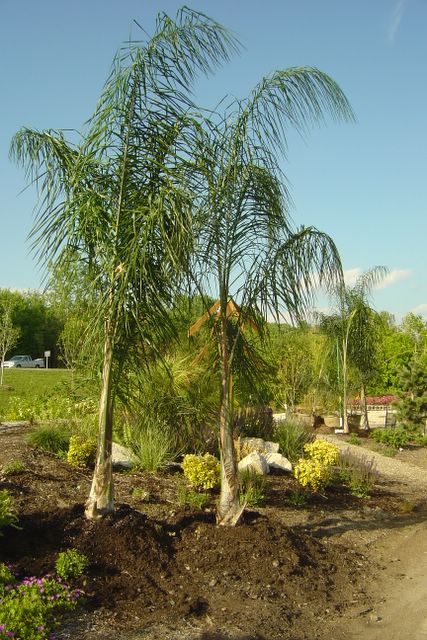
MATURE PALM TREES FOR SALE AT GREENSCAPE GARDENS. WOULDN'T THIS LOOK GREAT AROUND YOUR POOL IN THE BACK YARD?

Greenscape Gardens
THE OLD SIGN PHILOSOPHER, THOUGHT FOR THE DAY!

THINK MORE...........TALK LESS

XXXXXXXXXXXXXXXXXXXXXXXXXXXXXXXXXXXXXXXXXXXXXXXXXXX

Sorry for the lack of updates lately but the hot weather takes the writing juices out of the old sign philosopher. But for those who check out the website frequently: The website has had 47,xxx website visits in the past 18 months and over 186,xxx web page views in the same time. Hopefully with decent weather, I'll be able to update the blog and the website more often.

xxxxxxxxxxxxxxxxxxxxxxxxxxxxxxxxxxxxxxxxxxxxxxxxxxxxxxxxxxxxxxxx

LAWN PROBLEMS GALORE IN THE ST. LOUIS AREA.

In many parts of St. Louis moisture stress is present on many home lawns. In areas where supplemental irrigation is needed and water conservation is critical, a few suggestions:

* Water during times when evapotranspiration is the lowest. Watering during the middle of the day will result in significant evaporation of water not only from the turf but from sprinkler water spray prior to the water hitting the turf. Night watering increases the severity of disease however compared to water loss the potential increase in disease severity is minimal.

* Water deeply and infrequently. Warm season grasses have a deep root system allowing them to absorb deeper. Deep infrequent watering also allows for a greater hardening off of the turfgrass plant. In some instances where hand watering is being implemented this may be difficult.

* Bluish colored turf is a sign of wilting. Water when the turf needs moisture the most, which is at the first sign of wilt.

* Pray for rain. Its really getting serious. Today I was at a farm coop buying some supplies and all the farmers were discussing the severe drought conditions in the St. Charles area.

xxxxxxxxxxxxxxxxxxxxxxxxxxxxxxxxxxxxxxxxxxxxxxxxxxxxxxxxxxxxxxx

JAPANESE BEETLE HITS THE ST. LOUIS AREA

The Japanese beetle invaded portions of the St. Louis area in the past 2 weeks. We have been swamped with questions on what to do to eliminate this pest.

The Japanese beetle is a highly destructive plant pest of foreign origin. It was first found in the United States in a nursery in southern New Jersey nearly 80 years ago. In its native Japan, where the beetle's natural enemies keep its populations in check, this insect is not a serious plant pest.

In the United States, however, the beetle entered without its natural enemies and found a favorable climate and an abundant food supply. By 1972, beetle infestations had been reported in 22 States east of the Mississippi River and also in Missouri. In Missouri, it was originally found hitchhiking on travel trailers at Meramec State Park in Sullivan. Since then, the pest has continued to disperse south and west. Isolated infestations have been found in Wisconsin, Oregon, and California. Without its natural checks and balances, the Japanese beetle has become a serious plant pest and a threat to American agriculture.

Both as adults and as grubs (the larval stage), Japanese beetles are destructive plant pests. Adults feed on the foliage and fruits of several hundred species of fruit trees, ornamental trees, shrubs, vines, and field and vegetable crops. Adults leave behind skeletonized leaves and large, irregular holes in leaves. The grubs develop in the soil, feeding on the roots of various plants and grasses and often destroying turf in lawns, parks, golf courses, and pastures.

Today, the Japanese beetle is the most widespread turf-grass pest in the United States. Efforts to control the larval and adult stages are estimated to cost more than $460 million a year. Losses attributable to the larval stage alone have been estimated at $234 million per year--$78 million for control costs and an additional $156 million for replacement of damaged turf.

How To Recognize the Japanese Beetle's Life Stages

The adult Japanese beetle is a little less than 1/2 inch long and has a shiny, metallic-green body and bronze-colored outer wings. The beetle has six small tufts of white hair along the sides and back of its body under the edges of its wings. The males usually are slightly smaller than the females. You are most likely to see the adults in late spring or early summer.

During the feeding period, females intermittently leave plants, burrow about 3 inches into the ground--usually into turf--and lay a few eggs. This cycle is repeated until the female lays 40 to 60 eggs.

By midsummer, the eggs hatch, and the young grubs begin to feed. Each grub is about an inch long when fully grown and lies in a curled position. In late autumn, the grubs burrow 4 to 8 inches into the soil and remain inactive all winter. This insect spends about 10 months of the year in the ground in the larval stage.

In early spring, the grubs return to the turf and continue to feed on roots until late spring, when they change into pupae. In about 2 weeks, the pupae become adult beetles and emerge from the ground. This life cycle takes a year.

Homeowner Control

The Japanese beetle life cycle

No quick fixes can rid homeowners of the Japanese beetle once it becomes established. The Japanese beetle is here to stay. Therefore, we must learn to "live with" or manage this insect pest while attempting to minimize its impacts.

It is not necessary to eliminate the beetle in order to protect your trees, plants, and lawn. It is hard to predict when and where Japanese beetle populations will increase, and there is no guaranteed control formula to follow.

Traps for adult beetles operate primarily with two chemical lures. A combination of a pheromone, or sex attractant, and a floral lure attract both male and female adult beetles to the trap. Then, as a result of their clumsy flying and the design of the trap, they end up caught in either the bag or funnel portion of the trap.

If you put a trap out while the adults are flying and find that beetles fill the trap in 1 day, you probably have a Japanese beetle problem.

If, during a week, the bottom of the trap is barely filled, you probably do not need to be concerned. Adult beetles can fly long distances, so those caught in your yard may have come from up to a mile away. For this reason, it is difficult to estimate the number of grubs in your turf from adult trap catches.

If your lawn has brown or dead areas, survey near the edge of the damage. If you find that grubs are the cause of the damage, clearly this area should be treated. Just remember: There is several types of grubs found in the St. Louis area. The May or June beetle and the Southern masked chafer are the most dominant lawn problem beetles in the St. Louis area.

Control Methods

Chemical Controls

Homeowners who decide to use chemical methods to control Japanese beetle should base their decision on several factors. Correct timing and application are probably the most essential elements for success with pesticide applications. The following chemicals are effective for use in the control of the Japanese beetle adult and its grubs:

Chemicals for Adults:

Carbaryl
Malathion
Methoxychlor
Rotenone

Chemicals for Larvae:

Imidacloprid (Merit(TM) Insecticide for turf; Marathon(TM) for nursery use)
Bendiocarb
Isofenphos
Chlorpyrifos

Biological Controls

Homeowners who choose biological methods to control Japanese beetle populations can successfully use parasites, nematodes, fungi, or other biologically based approaches. Some of these agents are commercially available to homeowners; others are not. While they take a little longer to produce the same results as insecticides, biological control agents last longer in the environment. More importantly, they do not adversely affect nontarget or potentially beneficial organisms.

Bacillus thuringiensis (Bt)--Bt is a naturally occurring soil bacterium typically used as a microbial insecticide. The Bt strain registered for the Japanese beetle is for use on the grub stage only. Bt is a stomach poison and must be ingested to be effective. Apply it to the soil as you would insecticides. Effectiveness is similar to that of insecticides. Bt is available at Greenscape Gardens.

Milky Spore--Milky spore is the common name for spores of the bacterium Bacillus popillae. This bacterium was first registered for use on turf in suppression of the Japanese beetle grub in the United States in 1948. Milky spore is also available at Greenscape Gardens.

Upon ingestion, these spores germinate in the grub's gut, infect the gut cells, and enter the blood, where they multiply. The buildup of the spores in the blood causes the grub to take on a characteristic milky appearance.

Milky spore disease builds up in turf slowly (over 2-4 years) as grubs ingest the spores, become infected, and die, each releasing 1-2 billion spores back into the soil. Milky spore disease can suppress the development of large beetle populations.

Although the Japanese beetle feeds on almost 300 species of plants, it feeds sparingly or not at all on many cultivated plants. The various kinds of plants on your property can significantly influence the susceptibility of your property and plants to Japanese beetle damage. Having a well-dispersed mixture that favors nonpreferred species can reduce the level of beetle-caused damage.

Mechanical Traps

Millions of beetles are captured annually in mechanical traps. This method is an easy and inexpensive way to reduce beetle populations and curtail egg laying. Under favorable conditions, a trap will capture only about 75 percent of the beetles that approach it. Because the traps actually attract more beetles than they capture, be sure not to put traps near your garden or your favorite plants. Put traps at the borders of your property, away from plants the beetles may damage. We have sold in the past 2 weeks over 50 traps. Yes, we carry the Japanese Beetle trap and have found them very effective.

Replace the lure annually for the most effective trapping. Trap placement should be timed to coincide with the emergence of adult Japanese beetles in your area. Adults generally emerge between early June and late August.

CAUTION: (Sorry but I had to put in this disclaimmer) Pesticides can be injurious to humans, domestic animals, desirable plants, and fish or other wildlifeþif they are not handled or applied properly. Use all pesticides selectively and carefully. Follow recommended practices for the disposal of surplus pesticides and pesticide containers.

xxxxxxxxxxxxxxxxxxxxxxxxxxxxxxxxxxxxxxxxxxxxxxxxxxxxxxxxxxxxxxxxx

MORE LAWN PROBLEMS

Lawns that are heavily shaded can sometimes develop a white color on the grass blades, as if they have been dusted by powder. This is due to powdery mildew, a common fungal disease favored by cool, humid weather and shady conditions. Apply a fungus control material and do not water after 5 pm.

Sunday, June 26, 2005

Another incredible sunset at Greenscape Gardens. (I wish)

Greenscape Gardens
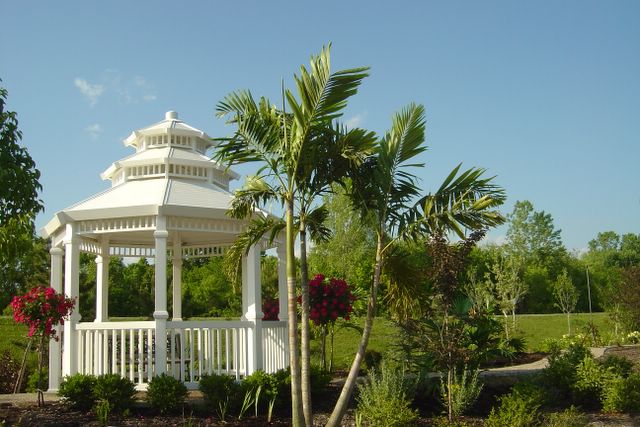
Dougherty Ferry Gazebo--check out the Knockout Rose Trees and the incredible palms. Almost looks like a tropical island minus the sand and ocean.

Greenscape Gardens

Thursday, June 23, 2005

THE OLD SIGN PHILOSOPHER, THOUGHTS FOR THE DAY!

BLUES INVESTORS WANTED.........NO EXPERIENCE NEEDED.........JUST MORE DOLLARS THAN SENSE!

IF YOU DON'T SUCCEED AT FIRST........SKYDIVING ISN'T FOR YOU!

XXXXXXXXXXXXXXXXXXXXXXXXXXXXXXXXXXXXXXXXXXXXXXXXXXXXXXX

LAST WEEKEND FOR RECYCLING POTS

DON'T PITCH THOSE PLASTIC GARDEN POTS!
WHAT: Plastic Pot Recycling and "Pots to Planks" plastic lumber program
WHEN: 9 a.m. to 4 p.m. weekends only, THIS IS THE LAST WEEKEND!
WHERE: Monsanto Center of the Missouri Botanical Garden, west parking lot
4500 Shaw Blvd. at Vandeventer
SPONSORS: Missouri Botanical Garden, the St. Louis-Jefferson Solid Waste Management District, Missouri Environmental Improvement and Energy Resource Authority, the Missouri Department of Natural Resources and Monrovia, Inc.
INFO: www.mobot.org/hort/activ/plasticpots.shtml or (314) 577-9440

(ST. LOUIS): The Missouri Botanical Garden has expanded its popular Plastic Pot Recycling program to six weekends this spring and summer, due to enthusiastic response. Bring clean plastic garden pots and trays to the Garden's Monsanto Center, 4500 Shaw Blvd. at Vandeventer, from 9 a.m. to 4 p.m. on weekends only beginning May 21 through June 26 and receive a complimentary admission pass for two to the Garden. The Monsanto Center will be the only collection center in the area this year.

"We are pleasantly surprised at the continued response by area gardeners to recycle their horticultural plastic each year," said Dr. Steven Cline, who started the program in 1998 and manages the Kemper Center for Home Gardening. Plastic garden pots and trays should be cleaned in advance and free of wire hangers. No household plastic will be accepted. Gardeners are encouraged to save their pots and trays all year long for this annual event.
Each person who recycles garden plastic will receive one admission pass, redeemable for a Garden visit for two. Passes will only be distributed during the collection hours of 9 a.m. to 4 p.m. on May 21-22, 28-29, June 4-5, 11-12, 18-19, and 25-26.

Over 90 volunteers assist the collection efforts. This year they hope to collect and process 60,000 pounds of plastic, an increase of one third over last year's goal. Weekend collections have totaled over 350,000 pounds since the program was initiated.
Monrovia, Inc., the largest grower of containerized plants in the U. S., has granted $5,000 in support of this collection program in 2005 to acknowledge the environmental leadership that such an effort can make in the horticulture industry. The St. Louis-Jefferson Solid Waste Management District, Missouri Environmental Improvement and Energy Recycling Authority and the Missouri Department of Natural Resources have also assisted with program funding. Their support has allowed the purchase of additional equipment necessary to process larger containers and bulk quantities from the public and horticulture industry. Increased mechanical capacity also affords a larger geographic collection from adjacent Solid Waste Districts.
Collected plastic will be shredded and chipped on site and sent to Environmental Recycling, Inc. of St. Louis. The recycled material will be made into two- by six-inch planks of lumber, which will then be sold as kits to home gardeners to build raised garden beds. Last year 40,000 pounds of collected plastic was converted into approximately 13,000 linear feet of lumber and sold back to the public over a nine-month period.
"Our hope is to affect how the horticultural industry could assist in managing this annual 350 million pound waste system in the U. S., and to change the public view of recycling into one that inspires product development, as we have done here," said Dr. Cline. An example of a garden bed made from recycled lumber is on display at the Garden's Kemper Center for Home Gardening, 4344 Shaw Blvd.

Pots to Planks brochure and order form is available online at www.mobot.org/hort/activ/plasticpots.shtml. Gardeners can place an order now for the recycled lumber and raised bed kits to be delivered in August. Supply is limited, so call the plastic lumber hotline at (314) 577-9443 to learn about availability.

XXXXXXXXXXXXXXXXXXXXXXXXXXXXXXXXXXXXXXXXXXXXXXXXXXXX

USDA TO PLANT 20 MILLION TREES

The USDA Forest Service announced a partnership with nonprofit organization American Forests, which will result in planting 20 tree seedlings nationwide. The initial projects will take place in AL, CA, CO, ID, IL, MT, TX and WY. The project will focus on restoring forest cover in national forests and around national grasslands

xxxxxxxxxxxxxxxxxxxxxxxxxxxxxxxxxxxxxxxxxxxxxxxxxxxxxxxxxxxxxxxxxx

In areas where shady or cloudy conditions have existed, powdery mildew is present on Kentucky bluegrass turf. The most common area is along the sides of homes or buildings or under densely shading trees. Powdery mildew appears as a whitish streak or spots on the upper side of the leaf. In some ways it looks like someone painted the leaf blade white. Generally this disease is considered a minor problem, but overtime can cause significant thinning especially in continual shade areas.

xxxxxxxxxxxxxxxxxxxxxxxxxxxxxxxxxxxxxxxxxxxxxxxxxxxxxxxxxxxxxxxxxxxx

THIS SUNDAY IS THE KIRKWOOD GARDEN CLUB GARDEN TOUR

THEME: Featuring 7 Fine Gardens of Kirkwood and Neighboring Communities

WHEN: Sunday, June 26, 2005; 1:00pm to 5:00pm

WHERE: Kirkwood and Neighboring Communities

COST: $10.00 in advance; $12.50 day of tour (tickets may be purchased at: OK Hatchery, 115 E. Argonne, Kirkwood; Kirkwood Library, 140 E. Jefferson; or by calling Cathy Reber at (314) 966-4151)

PRODUCED BY: Kirkwood Garden Club, gardening since 1950.

(KIRKWOOD, MO): A Garden Tour is planned for Sunday, June 26, 2005 from 1:00pm to 5:00pm featuring 7 fine gardens located in Kirkwood and neighboring communities. The Garden Tour is presented by the Kirkwood Garden Club. Themes of the private gardens on the tour include: Bird Sanctuary Garden (Glendale); Horticultural Professional’s Garden (Kirkwood); Hillside Garden (Des Peres); Sugar Creek Valley Garden (Kirkwood); Shady Border Garden (Kirkwood); Poolside Garden (Frontenac); Estate Garden (Ladue). Garden design styles range from traditional to the exotic and include a variety of features such as secret garden rooms and an architect-designed chicken coop. Tours are self-guided and gardens may be visited in any order desired.

For more information about the Kirkwood Garden Club and the Garden Tour, visit www.KirkwoodGardenClub.org.

Advance ticket cost is $10.00 (tickets may be purchased at: OK Hatchery, 115 E. Argonne, Kirkwood; Kirkwood Library, 140 E. Jefferson); $ 12.50 on the day of the tour.

For more information: www.KirkwoodGardenClub.org
OR contact: Cathy Reber (314) 966-4151

Thursday, June 16, 2005

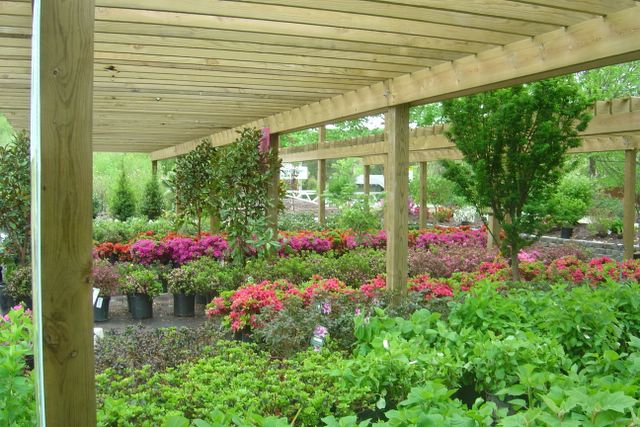
Shade plants properly displayed in "shade conditions". To assure the quality of our plants, we have built a shade structure to mirror the plant's proper sun exposure. Azaleas, rhodendrons and hydrangeas prefer shade.

Greenscape Gardens
Barrett Station Shade Garden. Note azaleas blooming and hostas in the background. Take the time and walk the two specimen gardens at the garden center. No other garden center in St. Louis has display gardens of this magnitude. Come to think about it.....Have you ever seen a display garden at the Big Box Hardware Store/garden center? How can they call themselves garden centers is a mystery to an Independent Garden Center.

Greenscape Gardens
THE OLD SIGN PHILOSOPHER, THOUGHT FOR THE DAY!

WE DON'T INHERIT THE EARTH FROM OUR PARENTS. WE ONLY BURROW IT FROM OUR CHILDREN.

XXXXXXXXXXXXXXXXXXXXXXXXXXXXXXXXXXXXXXXXXXXXXXXXXXX

The past few days we have been swamped with questions about newly planted trees and shrubs not looking well. The problem with the majority of the inquiries is lack of water. The next thing most people say is "We've just had alot of rainfall". How quickly everyone forgets that we had a whooping 1/2 inch of rainfall for the month of May. The period of time that normally has four inches. I hate to be a bearer of bad news but "DURING DROUGHTS YOU MUST WATER PLANTS". And the worst watering tool is "IRRIGATION SYSTEMS". The sprinkler system is for your lawn not TREES AND SHRUBBERY. Newly planted trees require of minimum of five gallons of water weekly. Most shrubbery require 2 gallons of water weekly.

Watering requirements: Hand water newly planted nursery stock..... take a five gallon bucket out and time how long it takes to fill the bucket and then pull the hose around your yard and water accordingly. If it takes 30 seconds to fill the bucket....water each tree 30 seconds and the corresponding time to a shrub.

At the garden center we have an irrigation system but we still employ two people to handwater every plant at the nursery. This is another reason to buy from an independent garden center vs. the big box hardware storre/part-time nursery. We take the time to assure that the plant is healthy when it leaves the nursery. It is your responsibility to properly care for the plants after it leaves the garden center. DO NOT EXPECT MOTHER NATURE OR YOUR SPRINKLER SYSTEM TO PROPERLY WATER THE PLANTS. "Soapbox closed".

xxxxxxxxxxxxxxxxxxxxxxxxxxxxxxxxxxxxxxxxxxxxxxxxxxxxxxxxxxxxxxxxxx

GOOD SOIL MEANS GREAT GARDENS

A constant question asked the garden center is, “How does my neighbor grow such great looking plants?” The answer is quite simple, they have built a great foundation of good soil. If garden beds do not have good textured soil that drains well, it won’t matter what you plant. The basic planting medium found in most yards consists of clay or other homeowners will find building debris/clay combination. The clay is as hard as brick in the summer and is gumbo in wet weather.

The best way to improve poor soil is to apply six inches or more of organic matter and work it into the soil to a depth of 8 to 10 inches. You can apply compost, peat moss, leaf mold or rotted manure. Greenscape Gardens prefer a mix of 75% compost and 25% peat moss to create well drained beds or berms. Another alternative is “garden mix” which is a combination of topsoil and compost blended together. Well rotted leaf mold will also improve the soil dramatically.

If you have a contractor do this work for you, expect to pay a couple of dollars per square foot to improve the soil. This will normally entail the preparation, cost of the material, and the incorporation of the medium. It will take about two cubic yards of material for each 100 square feet of garden.

Adding composted leaves to your garden soil will increase water absorption, improve water retention, increase aeration and reduce compaction. Moreover, the addition of this ‘black gold’ will conserve moisture, reduce surface crusting, insulate the surface and modify the pH of the soil.

Regular mulching during the growing season with bark or compost (soil conditioners) will continue to improve the garden bed as well as keep the weeds down. As the old mulch decomposes, add an additional inch or two. Once you have improved your garden soil in this way, you are bound to be pleased with the results and your plants will be significantly healthier and more blooms. GREAT GARDENS START WITH GREAT SOIL.

For additional information concerning the improvement of your soil check out another Greenscape Gardens site.

XXXXXXXXXXXXXXXXXXXXXXXXXXXXXXXXXXXXXXXXXXXXXXXXXXXXXXXXXXXXXXXXXXXXXXXXX

PRACTICE SAFE SUN

The Environmental Protection Agency shares a world-wide concern about the depletion of the ozone layer. Studies have shown that pollutants from Earth, primarily synthetic chemicals called chloroflourocarbons, or CFCs are finding their way to the stratosphere and destroying the protective ozone, a layer of gas around the earth that filters the sun’s harmful ultraviolet (UV) rays.

EPA is working with other countries to protect the ozone layer by eliminating the production of CFCs and by recycling existing supplies so that they aren’t released into the stratosphere. Recent data shows that five percent of the ozone layer over the U.S. has been destroyed since 1978. EPA estimates that the increase in UV radiation will cause an additional 200,000 skin cancer deaths and an additional 11 million skin cancer cases in the U.S. in the next 50 years.
Protecting your health from the sun’s harmful UV radiation doesn’t have to interfere with your outdoor activities. There are some protective measures that you can take to greatly reduce your risks. Here are a few on how to practice safe sun.
• Use a sunscreen of SPF 15 or higher (make sure its waterproof or sweatproof). Sunscreen should be used on cloudy days, because UV radiation is still present.
• Reapply sunscreen after about 2 hours outdoors, especially when sweating heavily.
• Wear a hat or cap, long sleeved shirt and long pants. Clothing should be tightly knit to block UV rays.
• Beware of reflective surfaces. Water and sand reflect radiation and can cause severe burns, even if you wear a hat.
• Wear UV proof sunglasses. UV ray can cause cataracts.

By practicing these sun habits, you can protect your health and still enjoy your outdoor activities especially gardening.

Thursday, June 09, 2005

THE OLD SIGN PHILOSOPHER, THOUGHTS FOR THE DAY!

JUNE IS PERENNIAL PLANT MONTH....CHECK OUT OUR GREAT SELECTION.

I LOSE WEIGHT.....BUT IT FINDS ME AGAIN......CHUBBY

XXXXXXXXXXXXXXXXXXXXXXXXXXXXXXXXXXXXXXXXXXXXXXXXX

KIRKWOOD GARDEN CLUB GARDEN TOUR

THEME: Featuring 7 Fine Gardens of Kirkwood and Neighboring Communities

WHEN: Sunday, June 26, 2005; 1:00pm to 5:00pm

WHERE: Kirkwood and Neighboring Communities

COST: $10.00 in advance; $12.50 day of tour (tickets may be purchased at: OK Hatchery, 115 E. Argonne, Kirkwood; Kirkwood Library, 140 E. Jefferson; or by calling Cathy Reber at (314) 966-4151)

PRODUCED BY: Kirkwood Garden Club, gardening since 1950.

(KIRKWOOD, MO): A Garden Tour is planned for Sunday, June 26, 2005 from 1:00pm to 5:00pm featuring 7 fine gardens located in Kirkwood and neighboring communities. The Garden Tour is presented by the Kirkwood Garden Club. Themes of the private gardens on the tour include: Bird Sanctuary Garden (Glendale); Horticultural Professional’s Garden (Kirkwood); Hillside Garden (Des Peres); Sugar Creek Valley Garden (Kirkwood); Shady Border Garden (Kirkwood); Poolside Garden (Frontenac); Estate Garden (Ladue). Garden design styles range from traditional to the exotic and include a variety of features such as secret garden rooms and an architect-designed chicken coop. Tours are self-guided and gardens may be visited in any order desired.


For more information about the Kirkwood Garden Club and the Garden Tour, visit www.KirkwoodGardenClub.org.

Advance ticket cost is $10.00 (tickets may be purchased at: OK Hatchery, 115 E. Argonne, Kirkwood; Kirkwood Library, 140 E. Jefferson); $ 12.50 on the day of the tour.

For more information: www.KirkwoodGardenClub.org
OR contact: Cathy Reber (314) 966-4151

XXXXXXXXXXXXXXXXXXXXXXXXXXXXXXXXXXXXXXXXXXXXXXXXX

GROW NATIVE! KNOW-HOW: THE WILD SIDE OF FOREST PARK

THEME: Practical Application Workshop for Professionals Featuring Design, Installation and Management Methods for Utilizing Native Plants in the Landscape
WHEN: Thursday, June 23, 2005, 8:00a.m. to 4:30p.m.
WHERE: St. Louis Forest Park/Event starts at the Dennis & Judith Jones Visitor & Education Center, 5595 Grand Drive in Forest Park
AUDIENCE: Landscape professionals
COST: $45.00 (Pre-registration ON OR PRIOR TO June 10, 2005 – pre-registration includes an invitation to the evening-prior/June 22nd reception and assures a reserved lunch for June 23rd)
PRODUCED BY: Grow Native! (a joint program of the Missouri Department of Conservation and Missouri Department of Agriculture), Missouri Botanical Garden/Shaw Nature Reserve, Horticulture Co-op of Metro St. Louis, American Society of Landscape Architects and Alberici Constructors in association with Forest Park Forever, Flora Conservancy of Forest Park, City of St. Louis Parks, Recreation and Forestry and St. Louis Zoo

(ST. LOUIS, MO): A practical application native plant workshop for landscape professionals will be offered on Thursday, June 23, 2005 from 8:00am to 4:30pm at St. Louis Forest Park, St. Louis, MO. The event, Grow Native! Know-How: The Wild Side of Forest Park, is produced by several local organizations, agencies and businesses including: Grow Native! (a joint program of the Missouri Department of Conservation and Missouri Department of Agriculture); Missouri Botanical Garden/Shaw Nature Reserve; Horticulture Co-op of Metro St. Louis; American Society of Landscape Architects; City of St. Louis Parks, Recreation and Forestry and Alberici Constructors; in association with Forest Park Forever; Flora Conservancy of Forest Park and St. Louis Zoo. The event starts at the Dennis & Judith Jones Visitor and Education Center, 5595 Grand Drive with an inspiring keynote presentation by James van Sweden of Oehme, van Sweden Associates. The workshop will continue with tours featuring four presentation teams representing four native plant landscapes in Forest Park at various stages of development including: Native Wetland Landscape; Native Savannah Planting; Native Prairie Landscape; Restored St. Louis Zoo Flight House Landscape. Each presenting team will include a project designer, installer and maintenance manager. Presentations will emphasize techniques, methods, materials and equipment related to native plant installation and management.

For more information about the presenters and other event activities, visit www.grownative.org and select the “Workshops and Events” section.

Pre-registration cost is $45.00 (on or prior to June 10, 2005 – pre-registration includes an invitation to the evening-prior/June 22nd reception with the presenters and assures a reserved lunch for June 23rd).
For access to a pre-registration form and/or more information: www.grownative.org
OR contact: Larry Havermann at Shaw Nature Reserve (636) 451-3512 ext 6079

XXXXXXXXXXXXXXXXXXXXXXXXXXXXXXXXXXXXXXXXXXXXXXXX

GROWING PERENNIALS

Herbaceous perennials generally live for three or more seasons, but usually the tops die back to the ground each fall. The crown and roots of the plant resume growth in spring. A few perennials are evergreen or keep a green rosette of leaves at the base in winter. Hardy perennials can live through the winter without protection.

Perennials provide year-round color and interest; with endless variations in colors, sizes, habits and time of bloom. Although some perennials flower for only a few weeks, the ever-changing color display forms much of the excitement of a perennial garden.

Some perennials, such as ferns and hostas, are grown principally for their beautiful foliage. Include foliage plants to extend seasonal color and texture in the garden.

LANDSCAPE USE

While the traditional English perennial border was entirely made up of herbaceous perennials, they are attractively used in combination with other plants in the total landscape. Perennials are easily used as ground covers, mixed with annuals, grown in containers, and used as accents or specimen plants.

There are perennials for full sun or heavy shade, for dry or wet soil. Select perennials that are suited to the growing conditions where they will be planted.

Select a planting area with good air circulation to help avoid diseases.

PLANTING PERENNIALS

Good soil preparation is extremely important for perennials, since they may be in place for many years. Deeply spade the beds to a depth of eight to 10 inches. Amend clay soils and improve water retention by mixing in at least 2 inches of compost, OR leaf mold to improve drainage and aeration. Good soil drainage is critical to the success of most perennials. Raised beds can be used to ensure adequate drainage.

Base fertilizer and lime applications on the results of a soil test for best results. In the absence of a soil test, add a complete fertilizer such as 10-10-10 at the rate of 1 pound per 100 square feet of bed area or a complete slow-release fertilizer following label directions.

A pH of 6.0 to 6.5 is ideal for most perennials. Most St. Louis soils are acidic and require the addition of lime to correct pH. Incorporate lime and fertilizer into the top 4 to 6 inches of soil after mixing in the soil amendments. Rake the soil surface smooth.

Planting

Most perennials can be planted in the fall or spring. Fall planting gives the plant more time to become established before the start of active growth in the spring. Fall planted perennials are usually well-established before hot weather. Fall planting should be finished at least 6 weeks before hard-freezing weather occurs.

Spring is also considered a good time to plant perennials. Planting early, just after killing frosts have passed, is better than later spring planting. Many perennials can be grown from seed, but most gardeners prefer to start with established plants. Perennials are available at Greenscape Gardens in containers.

If plants are somewhat pot-bound at planting time, loosen the roots around the bottom and sides of the root ball and spread them out in the bottom of the planting hole. To encourage side root growth, make the hole twice as wide as deep. Refill the hole, firming the soil in around the plant to avoid air pockets. Be sure the crown of the plant (the point where roots and top join)is even with the soil surface.

Watering

Water plants thoroughly following planting to settle the soil around the roots. Pay especially close attention to watering the first few weeks while plants develop their root systems. Adequate moisture is essential for the growth of perennials. Most perennials require at least 1 to 1½ inches of water per week from rain or irrigation. More may be needed during very hot weather.

To promote deep root growth, water thoroughly and deeply. Allow the soil surface to dry before watering again. Soaker hoses and drip irrigation are ideal watering methods since they save water and avoid wetting leaves and flowers.

Mulch with a 1- to 2-inch layer of compost, pine bark or pine straw to help keep down weeds and conserve moisture. Avoid overly heavy mulching to help prevent crown rot.

MAINTENANCE

Weed control should usually be done by hand-weeding or with the use of herbicides to avoid damging shallow roots. Read and follow label directions before using any herbicide.

Maintenance fertilization should be based on the results of a soil test. In the absence of a soil test, apply a complete fertilizer such as 12-12-12 at the rate of 1 to 2 pounds per 100 square feet of bed area just before new shoots emerge in the early spring. Avoid touching any emerging leaves with fertilizer to avoid leaf damage.
Many newly planted perennials will not bloom the first year. A few, such as peonies, may take several years to bloom heavily.
Many perennials should be staked to prevent them from bending or falling over during wind and rain. When staking is done correctly, the plants grow to cover the stakes. Remove old flowers to encourage rebloom on perennials. Many perennials should be cut back to ground level after bloom is finished to encourage new leaf growth from the base.

Remove dead foliage and stems in the fall, and mulch to protect crowns and roots from alternating mild and freezing weather.
Most perennials eventually become overcrowded and require division. Many perennials are also easily propagated in this way.

PROBLEMS

Perennials vary considerably in their susceptability to pests. Selection of resistant species and cultivars, proper site selection, and good cultural practices will prevent many disease problems.

PERENNIALS FOR VARIOUS USES

Many perennials are available in several cultivars with different color, height or other attributes. Some, such as the heat-and humidity-tolerant cultivar of lamb’s ears called ‘Big Ears,’ are better suited to our climate than the species.

Perennials for Shade

Those marked with a * will tolerate the most shade.

• Acanthus mollis Bear’s Breech
• Alchemilla mollis Lady’s Mantle
• Anemone species
• Aquilegia species Columbine
• Astilbe x arendsii Astilbe
• Begonia grandis Hardy Begonia
• Bergenia cordifolia Heartleaf Bergenia
• Carex elata Golden Sedge
• Ceratostigma plumbaginoides Plumbago
• Chelone obliqua Turtlehead
• Cimicifuga species Bugbane
• Convallaria majalis Lily-of-the-Valley *
• Cyclamen species Hardy Cyclamen
• Dicentra species Bleeding Heart
• Digitalis species Foxglove
• Epimedium species Barrenwort *
• Ferns * (most)
• Galium odoratum Sweet Woodruff *
• Geranium maculatum Wild Cranesbill
• Helleborus orientalis Lenten Rose
• Heuchera species Coral Bells
• Hosta species Plantain Lily
• Lamium maculatum Spotted Dead Nettle *
• Lobelia cardinalis Cardinal Flower *
• Mertensia virginica Virginia Bluebells *
• Myosotis sylvatica Forget-me-not
• Phlox stolonifera Creeping Woodland Phlox
• Polygonatum species Solomon’s Seal *
• Primula species Primrose
• Pulmonaria species Lungwort *
• Thalictrum species Meadow Rue
• Tiarella species Foam Flower *
• Tradescantia virginiana Spiderwort *
• Tricyrtis species Toad Lily *
• Viola species Violet *

Perennials for Hot, Dry Conditions

• Achillea species Yarrow
• Artemisia species Artemesia
• Asclepias tuberosa Butterfly Weed
• Baptisia species False Indigo
• Coreopsis species Coreopsis
• Cortaderia selloana Pampas Grass
• Delosperma cooperi Hardy Ice Plant
• Festuca ovina Blue Fescue
• Gaillardia species Blanket Flower
• Gaura lindheimeri Gaura
• Helianthus species Perennial Sunflower
• Hemerocallis species and hybrids Daylily
• Iris hybrids Bearded Iris
• Kniphofia uvaria Red Hot Poker
• Lantana species Lantana
• Lavandula x intermedia Provence Lavender
• Liatris species Gayfeather
• Oenothera species Evening Primrose, Sundrops
• Perovskia atriplicifolia Russian Sage
• Rudbeckia species Black-eyed Susan
• Sedum species Stonecrop
• Sempervivum tectorum Hens & Chickens
• Solidago odora Sweet Goldenrod
• Stachys byzantina Lamb’s Ear
• Verbena species Verbena
• Yucca species Yucca

Tolerant of Moist or Damp Soils

Those marked with a * will tolerate wetter soils.

• Aster novae-angliae New England Aster
• Astilbe x arendsii Astilbe
• Canna species Canna *
• Carex species Sedge *
• Chelone species Turtlehead *
• Cimicifuga species Bugbane
• Eupatorium purpureum Joe-Pye Weed
• Filipendula species Meadow Sweet
• Galium odoratum Sweet Woodruff
• Hemerocallis species Daylily
• Iris ensata Japanese Iris *
• Ligularia species Golden Ray *
• Lobelia cardinalis Cardinal Flower *
• Matteuccia pensylvanica Ostrich Fern
• Monarda species Bee Balm
• Myosotis sylvatica Forget-me-not
• Physostegia virginiana Obedient Plant
• Primula species Primrose
• Tradescantia virginiana Spiderwort

Perennials for Poor Soil

• Achillea species Yarrow
• Asclepias tuberosa Butterfly Weed
• Baptisia species Wild Indigo
• Euphorbia species Spurge
• Gaillardia species Blaket Flower
• Gaura lindheimerii Gaura
• Hemerocallis species Daylily
• Lantana species Lantana
• Plumbago auriculata Plumbago
• Yucca species Yucca

Attractive Foliage

Those marked with a * tolerate heat and humidity.

• Alchemilla mollis Lady’s Mantle
• Artemisia ‘Powis Castle’ Wormwood *
• Baptisia species False Indigo
• Chrysanthemum pacificum Gold & Silver Mum
• Delosperma cooperi Hardy Ice Plant *
• Dianthus gratianopolitanus Cheddar Pink *
• Helleborus orientalis Lenten Rose
• Heuchera species Coral Bells
• Hosta species and hybrids Plantain Lily
• Iris pallida ‘Variegata’ Varigated Sweet Iris
• Lamium maculatum Spotted Dead Nettle
• Ornamental Grasses
• Polygonatum species Solomon’s Seal
• Pulmonaria species Lungwort
• Sedum species Stonecrop
• Sempervivum tectorum Hen-and-chicks
• Stachys byzantina ‘Big Ears’ Lamb’s Ear *

Perennials That Can Be Invasive

• Aegopodium podagraria Goutweed
• Ajuga Bugleweed
• Artemisia ludoviciana Western Mugwort
• Arundinaria species Bamboo
• Bambusa species Clumping Bamboo
• Coronilla varia Crown Vetch
• Elymus arenarius Blue Lyme Grass
• Eupatorium coelestinum Hardy Ageratum
• Hemerocallis fulva Common Daylily, Ditch Lily
• Houttuynia cordata Chameleon Plant
• Lythrum salicaria Purple Loosestrife
• Miscanthus sinensis Silver Grass; Zebra Grass
• Mentha species Mint
• Oenothera species Evening Primrose
• Physostegia virginiana Obedient Plant
Thursday, June 02, 2005

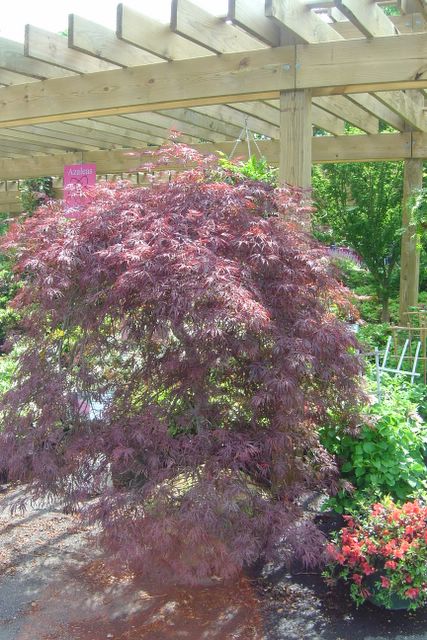
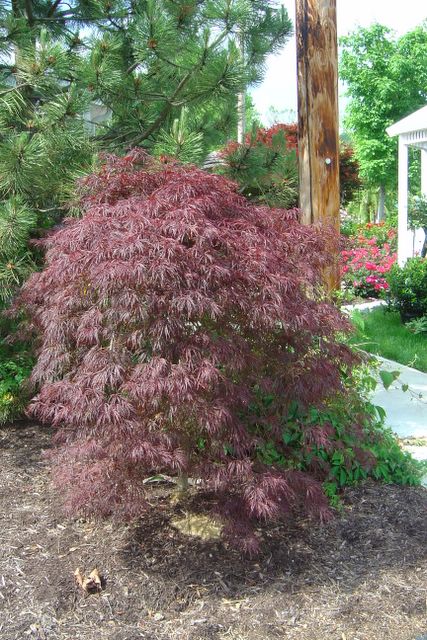
Another specimen Japanese Red Maple in the shade house structure.

Greenscape Gardens
One of the greatest collections of Japanese Red Maples is found at Greenscape Gardens.

Greenscape Gardens
Sunkist arborvitaes will add color to the landscape.

Greenscape Gardens
THE OLD SIGN PHILOSOPHER, THOUGHT FOR THE DAY!

SOME ARE WISE.......SOME OTHERWISE!!!!

XXXXXXXXXXXXXXXXXXXXXXXXXXXXXXXXXXXXXXXXXXXXXXXXXXX

WHAT A MEMORIAL DAY WEEKEND. IT WAS GREAT SERVING THE BEST CUSTOMERS IN ST. LOUIS OVER 900 HOT DOGS OVER THE THREE DAY MEMORIAL DAY WEEKEND. SALES WERE BRISK AND THE FOOD AND DRINK WAS "FREE". ITS THE GREENSCAPE GARDENS WAY OF SAYING THANK YOU FOR YOUR PATRONAGE. WE'VE BEEN TOLD THAT THERE IS OTHER GARDEN CENTERS IN THE ST. LOUIS AREA BUT THE BEST GARDENERS COME TO GREENSCAPE. KEEP SPREADING THE WORD TO YOUR FRIENDS AND NEIGHBORS. THANKS

XXXXXXXXXXXXXXXXXXXXXXXXXXXXXXXXXXXXXXXXXXXXXXXXXX

HYDRANGEAS----THE SUMMER FLOWERING SHADE SHRUB

Hydrangeas bring color to your shady gardens. Hydrangeas provide flower clusters like fluffy balls of cotton candy. From now through July, huge flower heads of blue, pink, white and blends of those two colors appear above the rich green leaves of these plants.

Hydrangeas (Hydrangea macrophylla) are deciduous shrubs originally native to Japan. They need an evenly moist soil and are intolerant of dry conditions. If you allow hydrangeas to wilt excessively, either those growing in pots or in the ground, it will shorten the life of the flowers and can cause the foliage to develop scorched edges.

Locate hydrangeas in a spot where they receive some shade during the day. A shady (two hours of direct sun) or partly shaded (about four hours of direct sun) bed is ideal. Avoid hot, sunny, dry areas or beds that are baked by the afternoon sun. Morning sun is much preferred by these plants, so an eastern exposure is excellent. Hydrangeas do best in beds that have been amended with generous amounts of organic matter, such as compost or peat moss. Dig in a 2-4 inch layer of organic matter during bed preparation. The organic matter helps retain moisture in the soil.
Once planted, it is important to keep hydrangeas well watered. Water deeply and thoroughly two or three times a week while they get established and then once or twice a week later on if the weather is dry. Hydrangeas also benefit from a 2-3 inch layer of mulch, over their root system to help maintain a moist soil condition.

The colorful parts of the flower head are not part of the flowers at all. What you might think of as petals actually are modified sepals. The actual flowers are tiny, inconspicuous and located in the middle of the four showy sepals. The flowers which have showy sepals are called sterile flowers. The mophead or hortensia hydrangeas have huge round heads of sterile flowers. Another group, the lacecap hydrangeas, has a center cluster of small fertile flowers, which are not showy, surrounded by a ring of attractive sterile flowers. The popular variegated hydrangea is a lacecap type.

When the colorful flower heads turn green it signals the ideal time to prune your plants. First, cut off the faded flower heads with stems about 4-6 inches. If you are trying to reduce the size of your bush, cut the heads with longer stems.
If there are any especially tall shoots, or if you need to cut the whole bush back to reduce its size, you may continue to cut back shoots to achieve the desired results. Pruning back stimulates new growth – creating a fuller, shapelier bush. This type of pruning must be done by the end of July at the latest. Hydrangeas set their flower buds for the next year in late summer, so any pruning after that removes the flower buds and reduces or eliminates flowers the next year.

The flower heads of hydrangeas are rather unique. Depending on how acid or alkaline the soil the plant is growing in, the colorful sepals can be different colors. For example, if you have pink hydrangeas and you want them to be blue, treat the soil around the bushes with aluminum sulphate in March and again in October each year. Gradually, over time, the flower heads will turn blue. If your hydrangeas are blue and you want them to be pink, treat the soil around the bushes with lime following the same schedule. It may take a couple of years to be fully effective.
The intensity of the color is controlled by genetics and depends on the variety you are growing. Since white hydrangeas do not have pigment in their sepals, they are white regardless of the soil pH. But the others can be varied.

The oakleaf hydrangea (Hydrangea quercifolia), with its large pointed cones of white flowers, which age to dusty rose, and its dark green attractive leaves, also deserves consideration for shady areas of your landscape. Larger growing than standard hydrangeas (up to six feet), oak leaf hydrangeas also are deciduous and have the added attraction of orange to burgundy fall color.

Greenscape Gardens has a great collection of hydrangeas including the "Endless Summer Hydrangea". This hydrangea flowers on last year's wood and this years new growth. Also of interest is "Big Daddy". We have seen "Big Daddy" flowers as big as a basketball. These two new hydrangeas are a must for any shade garden.