
THE OLD SIGN PHILOSOPHER, THOUGHT FOR THE DAY!
A BIRD IN HAND.......CAN BE MESSY
Saturday, March 25, 2006


Wednesday, March 22, 2006
LAUGHTER IS THE BEST MEDICINE.
Science has spent billions of money on research to tell us something we've all known for years that the best medicine is laughter. Reader's Digest has been advocating this philosophy in their monthly column for fifty years. Greenscape Gardens has been advocating this same principle with the Old Sign Philosophy sayings for thirteen years.
Our thought provoking MARQUEE SIGN has entertained the west county motorists. Check out the Old Sign Philosophy.
Science has spent billions of money on research to tell us something we've all known for years that the best medicine is laughter. Reader's Digest has been advocating this philosophy in their monthly column for fifty years. Greenscape Gardens has been advocating this same principle with the Old Sign Philosophy sayings for thirteen years.
Our thought provoking MARQUEE SIGN has entertained the west county motorists. Check out the Old Sign Philosophy.
ORGANIC GARDENING-------THE HEALTHY ALTERNATIVE
For every problem that may arise in your garden, there’s a green, organic solution. Instead of using synthetic chemicals, which may leach into and contaminate the soil and groundwater, use these time-tested, organic methods. And remember, the best organic practice is prevention-healthy soil and healthy plants are more resistant to pests and diseases.
Keep your soil healthy by adding lots of organic matter, in the form of compost, throughout the growing season. Compost contributes to the health of the soil by supplying nutrients, improving soil texture and drainage, conserving soil moisture and encouraging earthworms and soil microorganisms.
Keep your plants healthy by making sure they’re not too crowded and that they’re getting the proper amount of water (neither too much nor too little). Divide over-crowded plants and plant divisions in another spot in your garden-or give them to friends. Hand-pull weeds when they first appear, before they go to seed. By dealing with weeds immediately, you’ll save lots of time later.
Inspect your plants regularly, and at the first sign of insect infestation, learn to identify what particular creature is affecting your plant. (Not all bugs are bad! Many are beneficial.) For a good all-purpose, organic spray to control insects, mix 1 whole garlic bulb, a generous pinch of cayenne pepper and 1 litre of water in a blender. Mix thoroughly, let the solids settle, and then pour the liquid into a spray bottle. Spray on the leaves (tops and undersides) and stems of insect-infested plants. You can also use a commercially available organic insecticidal soap, such as Safer’s.
Birds eat bugs. Attract birds to your garden to reduce insect activity. Remove diseased plants from the garden, and clean your tools regularly. Consider companion planting in the vegetable garden to keep pests to a minimum. For example, plant marigolds around the tomato patch-the marigolds’ strong smell repels insects.
For every problem that may arise in your garden, there’s a green, organic solution. Instead of using synthetic chemicals, which may leach into and contaminate the soil and groundwater, use these time-tested, organic methods. And remember, the best organic practice is prevention-healthy soil and healthy plants are more resistant to pests and diseases.
Keep your soil healthy by adding lots of organic matter, in the form of compost, throughout the growing season. Compost contributes to the health of the soil by supplying nutrients, improving soil texture and drainage, conserving soil moisture and encouraging earthworms and soil microorganisms.
Keep your plants healthy by making sure they’re not too crowded and that they’re getting the proper amount of water (neither too much nor too little). Divide over-crowded plants and plant divisions in another spot in your garden-or give them to friends. Hand-pull weeds when they first appear, before they go to seed. By dealing with weeds immediately, you’ll save lots of time later.
Inspect your plants regularly, and at the first sign of insect infestation, learn to identify what particular creature is affecting your plant. (Not all bugs are bad! Many are beneficial.) For a good all-purpose, organic spray to control insects, mix 1 whole garlic bulb, a generous pinch of cayenne pepper and 1 litre of water in a blender. Mix thoroughly, let the solids settle, and then pour the liquid into a spray bottle. Spray on the leaves (tops and undersides) and stems of insect-infested plants. You can also use a commercially available organic insecticidal soap, such as Safer’s.
Birds eat bugs. Attract birds to your garden to reduce insect activity. Remove diseased plants from the garden, and clean your tools regularly. Consider companion planting in the vegetable garden to keep pests to a minimum. For example, plant marigolds around the tomato patch-the marigolds’ strong smell repels insects.
Tuesday, March 21, 2006
A Tomato a Day?
Remember that old adage about an apple a day keeping the doctor away? Well, how about a tomato a day? Many researchers believe that tomatoes may contain key anti-cancer properties in the form of lycopene, a powerful antioxidant.
Because the body cannot synthesize lycopene, we must consume it as part of a balanced diet if we are to reap its rewards. You'll find lycopene primarily in tomato products; other sources include watermelon, pink grapefruit, and apricots. To get cancer-protective benefits, researchers suggest consuming 5 to 10 servings of tomato-based products a week. Dietitians generally recommend fresh and whole foods as the best sources of nutrients but with lycopene, you'll get even more benefits if it the tomato has been cooked.
Lycopene is available in supplement form but most research has focused on its dietary consumption. For this reason, researchers are still unsure of the optimal dose and the risks vs. benefits of lycopene supplements. Your best bet is to consume lycopene-rich foods routinely. Spaghetti sauce and tomato soup, both rich in lycopene, are two worthwhile additions to your diet.
Remember that old adage about an apple a day keeping the doctor away? Well, how about a tomato a day? Many researchers believe that tomatoes may contain key anti-cancer properties in the form of lycopene, a powerful antioxidant.
Because the body cannot synthesize lycopene, we must consume it as part of a balanced diet if we are to reap its rewards. You'll find lycopene primarily in tomato products; other sources include watermelon, pink grapefruit, and apricots. To get cancer-protective benefits, researchers suggest consuming 5 to 10 servings of tomato-based products a week. Dietitians generally recommend fresh and whole foods as the best sources of nutrients but with lycopene, you'll get even more benefits if it the tomato has been cooked.
Lycopene is available in supplement form but most research has focused on its dietary consumption. For this reason, researchers are still unsure of the optimal dose and the risks vs. benefits of lycopene supplements. Your best bet is to consume lycopene-rich foods routinely. Spaghetti sauce and tomato soup, both rich in lycopene, are two worthwhile additions to your diet.
Saturday, March 18, 2006
Thursday, March 16, 2006
GREENSCAPE GARDENS TOP 2006 PERENNIAL PICKS
1. Hemerocallis 'Stella de Oro'
2. Hemerocallis 'Happy Returns'
3. Coreopsis v. 'Moonbeam'
4. Hosta 'Francee'
5. Artemisia s. 'Silver Mound'
6. Gaillardia 'Fanfare' PP15892
7. Salvia n. 'May Night'
8. Hosta 'Sum and Substance'
9. Sedum 'Autumn Joy'
10. Perovskia atriplicifolia
11. Hemerocallis 'Stella de Oro'
12. Hemerocallis 'Happy Returns'
13. Coreopsis v. 'Moonbeam'
14. Hosta 'Francee'
15. Artemisia s. 'Silver Mound'
16. Gaillardia 'Fanfare' PP15892
17. Salvia n. 'May Night'
18. Hosta 'Sum and Substance'
19. Sedum 'Autumn Joy'
20. Perovskia atriplicifolia
We have over 20,000 Greenscape Grown Perennials growing in our five greenhouses.
1. Hemerocallis 'Stella de Oro'
2. Hemerocallis 'Happy Returns'
3. Coreopsis v. 'Moonbeam'
4. Hosta 'Francee'
5. Artemisia s. 'Silver Mound'
6. Gaillardia 'Fanfare' PP15892
7. Salvia n. 'May Night'
8. Hosta 'Sum and Substance'
9. Sedum 'Autumn Joy'
10. Perovskia atriplicifolia
11. Hemerocallis 'Stella de Oro'
12. Hemerocallis 'Happy Returns'
13. Coreopsis v. 'Moonbeam'
14. Hosta 'Francee'
15. Artemisia s. 'Silver Mound'
16. Gaillardia 'Fanfare' PP15892
17. Salvia n. 'May Night'
18. Hosta 'Sum and Substance'
19. Sedum 'Autumn Joy'
20. Perovskia atriplicifolia
We have over 20,000 Greenscape Grown Perennials growing in our five greenhouses.
IMPROVE THE SOIL FOR MAXIMUM RESULTS
A healthy, flourishing garden begins with healthy soil. By learning as much as you can about your soil, you will be better able to match plants to your conditions. Missouri Botantical Gardens, University of Missouri Extension Service and even OK Hatchery in Kirkwood can test your soil. The test will reveal the composition of your soil (whether it’s predominantly clay, loam or sand), the nutrient levels in your soil, and the soil’s pH (its acidity or alkalinity).
You can also do a home test to determine whether your soil is clay, loam or sand. Put a handful of garden soil in a litre jar, fill it with water, shake, and then leave it to settle for a day. Sand will settle to the bottom, silt will be the next layer, with clay on top. (Organic matter will float on the water’s surface.) Compare the percentage of each layer to determine whether you’ve got loam (20% clay, 40% silt, 40% sand), clay (60% clay, 30% silt, 10% sand), or sand (5% clay, 10% silt, 85% sand).
A laboratory soil test will tell you whether your soil’s pH is acidic, neutral or alkaline--which will help you determine what plants will do best in your conditions.
To determine the drainage capacity of your soil, dig a hole 1 foot deep and 1 foot wide. Fill it with water, let it drain completely, then fill again until the soil is saturated. Depending on how long it takes for this last batch to drain, you’ve either got adequate drainage (less than 2 hours), or poor drainage (more than 2 hours).
Whatever your soil type, pH, drainage and nutrient levels, you can improve the health of your soil by adding compost. Dig in lots of compost when first preparing your garden bed for planting. In already established gardens, add a 3-inch layer of compost around your plants in spring, summer or fall.
Additional information about improving your soil can be found at our website.
Great gardens ONLY happen when an improved soil foundation has been installed. At Greenscape Gardens we are constantly informing the customer to spend additional monies on improving the soil and less on the plant material. We are in the business to sell plants but plants only grow and prosper when they are given the proper incentives to grow........GOOD SOIL.
A healthy, flourishing garden begins with healthy soil. By learning as much as you can about your soil, you will be better able to match plants to your conditions. Missouri Botantical Gardens, University of Missouri Extension Service and even OK Hatchery in Kirkwood can test your soil. The test will reveal the composition of your soil (whether it’s predominantly clay, loam or sand), the nutrient levels in your soil, and the soil’s pH (its acidity or alkalinity).
You can also do a home test to determine whether your soil is clay, loam or sand. Put a handful of garden soil in a litre jar, fill it with water, shake, and then leave it to settle for a day. Sand will settle to the bottom, silt will be the next layer, with clay on top. (Organic matter will float on the water’s surface.) Compare the percentage of each layer to determine whether you’ve got loam (20% clay, 40% silt, 40% sand), clay (60% clay, 30% silt, 10% sand), or sand (5% clay, 10% silt, 85% sand).
A laboratory soil test will tell you whether your soil’s pH is acidic, neutral or alkaline--which will help you determine what plants will do best in your conditions.
To determine the drainage capacity of your soil, dig a hole 1 foot deep and 1 foot wide. Fill it with water, let it drain completely, then fill again until the soil is saturated. Depending on how long it takes for this last batch to drain, you’ve either got adequate drainage (less than 2 hours), or poor drainage (more than 2 hours).
Whatever your soil type, pH, drainage and nutrient levels, you can improve the health of your soil by adding compost. Dig in lots of compost when first preparing your garden bed for planting. In already established gardens, add a 3-inch layer of compost around your plants in spring, summer or fall.
Additional information about improving your soil can be found at our website.
Great gardens ONLY happen when an improved soil foundation has been installed. At Greenscape Gardens we are constantly informing the customer to spend additional monies on improving the soil and less on the plant material. We are in the business to sell plants but plants only grow and prosper when they are given the proper incentives to grow........GOOD SOIL.
Tuesday, March 14, 2006
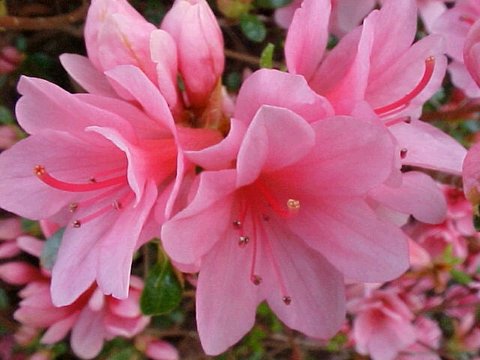
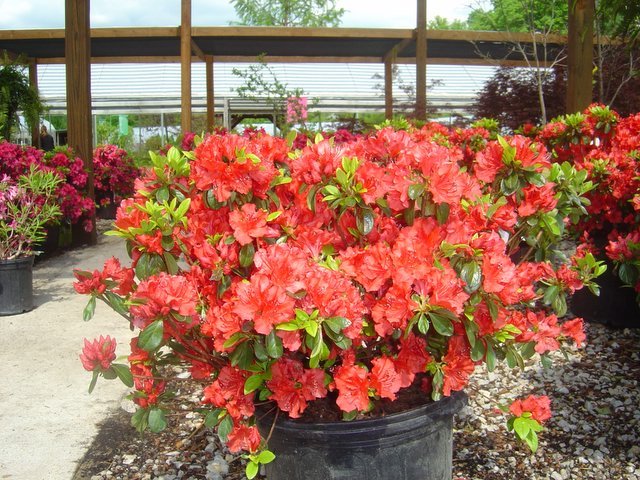 ONE OF THE MOST BEAUTIFUL FLOWERING SHRUBS IN NATURE IS DEFINITELY THE AZALEA. FOR THE LARGEST SELECTION OF AZALEAS IN THE MIDWEST, GREENSCAPE GARDENS. THE SHADEHOUSE IS BRIMMING WITH 10 DIFFERENT VARIETIES OF AZALEAS. PLUS A GREAT SELECTION OF RHODIES.
 BUY THEM NOW..........
WOULDN'T YOU PREFER THE FLOWERS IN YOUR GARDEN THAN GREENSCAPE GARDENS.

WELCOME WILDLIFE TO THE GARDEN
With spring quickly approaching, we should consider welcoming wildlife into our gardens. Birds, butterflies and pollinating insects all bring life to the garden and pleasure to the gardener. Hang out the welcome mat by creating habitat that meets the needs of wild creatures.
The best way to attract wildlife is to plant a diversity of species: trees, shrubs and perennials. These different layers in the garden will provide a variety of habitats for the specific needs of various creatures.
Include varieties of flowers that bloom throughout the growing season, from spring to fall, ensuring a long-lasting food source for nectar-loving creatures such as butterflies. Leave seedpods on perennial plants over the winter to provide an important food source for birds. If you have the space, consider planting both deciduous and evergreen trees, which will provide year-round habitat for birds. Choose shrubs that produce berries for birds.
Consider replacing a portion of the lawn with either a flowerbed or a low-growing groundcover. Lawns provide little in the way of wildlife habitat.
Consider adding a water feature to your garden. This is one of the best ways to create wildlife habitat. Water features can be as simple as a bowl of water left on the ground in an open area or, better yet, it can be a bird bath. A pond requires more work (both in planning and in maintenance), but has enormous wildlife benefits.
To attract wildlife, it’s important to garden organically. Synthetic chemicals kill butterflies and beneficial insects. Keep a list of the creatures that visit your garden habitat, and share the news of sightings with others in your neighbourhood. It may inspire them to create wildlife habitat, too.
With spring quickly approaching, we should consider welcoming wildlife into our gardens. Birds, butterflies and pollinating insects all bring life to the garden and pleasure to the gardener. Hang out the welcome mat by creating habitat that meets the needs of wild creatures.
The best way to attract wildlife is to plant a diversity of species: trees, shrubs and perennials. These different layers in the garden will provide a variety of habitats for the specific needs of various creatures.
Include varieties of flowers that bloom throughout the growing season, from spring to fall, ensuring a long-lasting food source for nectar-loving creatures such as butterflies. Leave seedpods on perennial plants over the winter to provide an important food source for birds. If you have the space, consider planting both deciduous and evergreen trees, which will provide year-round habitat for birds. Choose shrubs that produce berries for birds.
Consider replacing a portion of the lawn with either a flowerbed or a low-growing groundcover. Lawns provide little in the way of wildlife habitat.
Consider adding a water feature to your garden. This is one of the best ways to create wildlife habitat. Water features can be as simple as a bowl of water left on the ground in an open area or, better yet, it can be a bird bath. A pond requires more work (both in planning and in maintenance), but has enormous wildlife benefits.
To attract wildlife, it’s important to garden organically. Synthetic chemicals kill butterflies and beneficial insects. Keep a list of the creatures that visit your garden habitat, and share the news of sightings with others in your neighbourhood. It may inspire them to create wildlife habitat, too.
Monday, March 13, 2006
Saturday, March 11, 2006
Cool season grasses are starting to wake up and now is the time to start caring for your lawn care needs! The first application of crabgrass control should be applied between now and the second week of April.
If your lawn is in serious need of seeding---DO NOT APPLY CRABGRASS CONTROL--until the new seedlings are at least 1-2 inches of height. The crabgrass control agent will reduce, if not eliminate seed germination.
Greenscape Gardens highly recommends a second application of crabgrass control six weeks after the first application. We highly recommend applying (a crabgrass only product) if a serious crabgrass infestation occurred last year. The areas which should be reapplied include any sunny areas especially along sidewalks and driveway areas where the sun will warm up the area more.
We don't recommend applying pre-emergent control to zoysia and bermuda grass.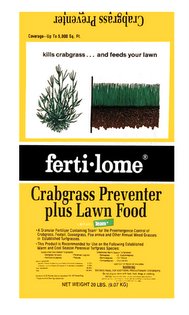

If your lawn is in serious need of seeding---DO NOT APPLY CRABGRASS CONTROL--until the new seedlings are at least 1-2 inches of height. The crabgrass control agent will reduce, if not eliminate seed germination.
Greenscape Gardens highly recommends a second application of crabgrass control six weeks after the first application. We highly recommend applying (a crabgrass only product) if a serious crabgrass infestation occurred last year. The areas which should be reapplied include any sunny areas especially along sidewalks and driveway areas where the sun will warm up the area more.
We don't recommend applying pre-emergent control to zoysia and bermuda grass.

GROW NATIVE
Native plants are species that existed in an area prior to European settlement. They’ve developed over millennia and are adapted to local conditions. The big advantage for the green gardener is that native plants tend to be lower maintenance, requiring little in the way of supplementary watering and no synthetic chemicals.
Learn about the native plants that grow in your area, and learn about what type of habitat they prefer in the wild (for example, woodland, meadow, prairie, wetland).
Visit a specialty native plant nursery to find out what native plants are commercially available in your area. (Never dig plants from the wild.) Compare the conditions found in your garden (shade or sun, dry or moist, etc.) to the conditions required by a variety of native plants that you’re interested in growing and that are commercially available in your area.
The native plants will thrive in your garden when you match the plants to the conditions-woodland plants for shade, sun-loving plants for meadows and prairies, wetland plants for moist areas. Water young transplants for the first six weeks after planting, but after that, they should thrive without supplementary watering.
Design your native plant garden in whatever style appeals to you. Consider the placement of your native plants, to reduce any infractions from local ordinances.
Friday, March 10, 2006
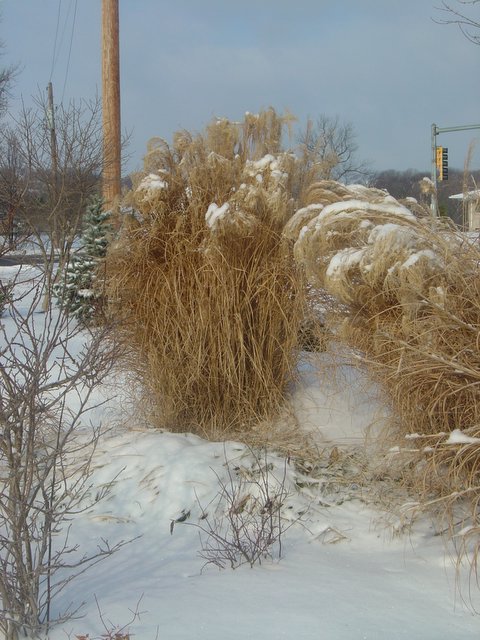
GRASS GAS......ALTERNATIVE FUEL
“Forty percent of U.S. energy is used as electricity,” doctoral students Emily A. Heaton and Frank G. Dohleman, “And the easiest way to get electricity is using a solid fuel such as coal. However, dry, leafless Miscanthus stems can be used as a solid fuel.” The cool-weather-friendly perennial grass, sometimes referred to as elephant grass or E-grass, grows from an underground stem-like organ called a rhizome.
Burning Miscanthus produces only as much carbon dioxide as it removes from the air as it grows, said Heaton, who is seeking a doctorate in crop sciences. That balance means there is no net effect on atmospheric carbon dioxide levels, which is not the case with fossil fuels, she said. Miscanthus also is a very efficient fuel, because the energy ratio of input to output is less than 0.2. In contrast, the ratios exceed 0.8 for ethanol and biodiesel from canola, which are other plant-derived energy sources.
Besides being a clean, efficient and renewable fuel source, Miscanthus also is remarkably easy to grow. Other varieties of Miscanthus have been grown successfully in Indiana, Michigan and Ohio. However, the giant Miscanthus being grown by the Illinois researchers has the greatest potential as a fuel source because of its high yields and because it is sterile and cannot become a weed. “Miscanthus sacchariflorus and some of the other fertile Miscanthus species can be quite invasive.” The next step is to demonstrate how Miscanthus goes from a plant to a power source. Existing U.S. power plants could be modified to use Miscanthus for fuel as in Europe, he said. Long collaborates with researchers at the Institute of Genomic Biology to study whether Miscanthus could be converted to alcohol, which could be used as fuel. Source: Science Daily.
“Forty percent of U.S. energy is used as electricity,” doctoral students Emily A. Heaton and Frank G. Dohleman, “And the easiest way to get electricity is using a solid fuel such as coal. However, dry, leafless Miscanthus stems can be used as a solid fuel.” The cool-weather-friendly perennial grass, sometimes referred to as elephant grass or E-grass, grows from an underground stem-like organ called a rhizome.
Burning Miscanthus produces only as much carbon dioxide as it removes from the air as it grows, said Heaton, who is seeking a doctorate in crop sciences. That balance means there is no net effect on atmospheric carbon dioxide levels, which is not the case with fossil fuels, she said. Miscanthus also is a very efficient fuel, because the energy ratio of input to output is less than 0.2. In contrast, the ratios exceed 0.8 for ethanol and biodiesel from canola, which are other plant-derived energy sources.
Besides being a clean, efficient and renewable fuel source, Miscanthus also is remarkably easy to grow. Other varieties of Miscanthus have been grown successfully in Indiana, Michigan and Ohio. However, the giant Miscanthus being grown by the Illinois researchers has the greatest potential as a fuel source because of its high yields and because it is sterile and cannot become a weed. “Miscanthus sacchariflorus and some of the other fertile Miscanthus species can be quite invasive.” The next step is to demonstrate how Miscanthus goes from a plant to a power source. Existing U.S. power plants could be modified to use Miscanthus for fuel as in Europe, he said. Long collaborates with researchers at the Institute of Genomic Biology to study whether Miscanthus could be converted to alcohol, which could be used as fuel. Source: Science Daily.
PLANTS OF MERIT PROGRAM ASSISTS HOME GARDENING SUCCESS
(ST. LOUIS): Gardeners choosing plants for their gardens this year should first consider the Missouri Botanical Garden's dependable, recommended "Plants of Merit." Fifty-five selections have been named for 2006, including several first-time additions. Each has proven to be outstanding and reliable in the lower Midwest growing region, USDA zones five and six.
Established in 1999, the Plants of Merit program has quickly become an industry model among comprehensive plant recognition programs, focused on regionally promoting ecologically responsible diversity. The program, established by the Missouri Botanical Garden's William T. Kemper Center for Home Gardening in partnership with Powell Gardens and the University of Missouri Extension, shares expert industry knowledge of annuals, perennials, trees, shrubs and vines with home gardeners. Plant selections are dependable performers yet often underutilized by home gardeners because limited information about them is available.
"With Plants of Merit, a homeowner can save both money and time," said Mary Ann Fink, program coordinator. "The program assists gardeners in creating a pretty garden or landscape that can be easily managed without chemicals and extra work."
Each year Plants of Merit sponsors - including industry professionals and associates, institutional representatives and the gardening community - present a consulting committee with a variety of plants for possible inclusion in the list. The committee compiles the final Plants of Merit selections by focusing on what makes a quality plant. Selections are considered "good neighbor plants" for being attractive, disease and pest resistant, and non-invasive, therefore promoting responsible diversity. Plants' performances are observed for two to five years, depending on category, in order to determine their reliability. Pictures, descriptions and information on growing conditions are including in the Plants of Merit resource guide. Once plants have gained mainstream recognition and appeal, they are graduated to emeritus standing.
Among several new additions to the 2006 Plants of Merit guide is Elephant ear (Xanthosoma 'Lime Zinger'), an annual with large tropical green foliage, providing a perfect contrast with ferns and hostas. It thrives in partial shade, with leaves that grow up to 30 inches in length on plants that grow between three and four feet tall.
The 2006 guide also notes several habitat plants or selections that are attractive to wildlife. Cypress vine (Ipomoea quamoclit), for example, is an annual from the morning glory family that makes a superb cover for fences and trellises, growing between four to six feet long and potentially reaching up to 10 feet long. Its tubular scarlet flowers are magnets for hummingbirds. The Seven-son flower tree, (Heptacodium miconiodies) is a small ornamental increasing in popularity for its fragrant clusters of white flowers that bloom from late August to late September. By flowering at a young age, the tree offers butterflies a reliable nectar source year after year. Flowers are followed by a showy display of purplish-red fruits, offering multiple seasons of interest.
Today, the Plants of Merit program is financially sponsored by 60 green community members, including retail nursery and garden centers. The 2006 guide can be purchased for $2 from the Kemper Center or the Garden Gate Shop of the Missouri Botanical Garden, 4344 Shaw Blvd. in St. Louis, or from any program sponsor. View the guide free of charge online at www.plantsofmerit.org.
For more information on the Plants of Merit program, including how a community or group can earn a Merit Garden Recognition, call Mary Ann Fink at (314) 577-9443.
GREENSCAPE GARDENS IS A PROUD SPONSOR OF THE PLANTS OF MERIT. IN ADDITION, WE HAVE ONE OF THE LARGEST DISPLAY GARDENS OF PLANTS OF MERIT. MANY OF THE PLANTS HAVE BEEN PLANTED FOR SEVERAL YEARS.
(ST. LOUIS): Gardeners choosing plants for their gardens this year should first consider the Missouri Botanical Garden's dependable, recommended "Plants of Merit." Fifty-five selections have been named for 2006, including several first-time additions. Each has proven to be outstanding and reliable in the lower Midwest growing region, USDA zones five and six.
Established in 1999, the Plants of Merit program has quickly become an industry model among comprehensive plant recognition programs, focused on regionally promoting ecologically responsible diversity. The program, established by the Missouri Botanical Garden's William T. Kemper Center for Home Gardening in partnership with Powell Gardens and the University of Missouri Extension, shares expert industry knowledge of annuals, perennials, trees, shrubs and vines with home gardeners. Plant selections are dependable performers yet often underutilized by home gardeners because limited information about them is available.
"With Plants of Merit, a homeowner can save both money and time," said Mary Ann Fink, program coordinator. "The program assists gardeners in creating a pretty garden or landscape that can be easily managed without chemicals and extra work."
Each year Plants of Merit sponsors - including industry professionals and associates, institutional representatives and the gardening community - present a consulting committee with a variety of plants for possible inclusion in the list. The committee compiles the final Plants of Merit selections by focusing on what makes a quality plant. Selections are considered "good neighbor plants" for being attractive, disease and pest resistant, and non-invasive, therefore promoting responsible diversity. Plants' performances are observed for two to five years, depending on category, in order to determine their reliability. Pictures, descriptions and information on growing conditions are including in the Plants of Merit resource guide. Once plants have gained mainstream recognition and appeal, they are graduated to emeritus standing.
Among several new additions to the 2006 Plants of Merit guide is Elephant ear (Xanthosoma 'Lime Zinger'), an annual with large tropical green foliage, providing a perfect contrast with ferns and hostas. It thrives in partial shade, with leaves that grow up to 30 inches in length on plants that grow between three and four feet tall.
The 2006 guide also notes several habitat plants or selections that are attractive to wildlife. Cypress vine (Ipomoea quamoclit), for example, is an annual from the morning glory family that makes a superb cover for fences and trellises, growing between four to six feet long and potentially reaching up to 10 feet long. Its tubular scarlet flowers are magnets for hummingbirds. The Seven-son flower tree, (Heptacodium miconiodies) is a small ornamental increasing in popularity for its fragrant clusters of white flowers that bloom from late August to late September. By flowering at a young age, the tree offers butterflies a reliable nectar source year after year. Flowers are followed by a showy display of purplish-red fruits, offering multiple seasons of interest.
Today, the Plants of Merit program is financially sponsored by 60 green community members, including retail nursery and garden centers. The 2006 guide can be purchased for $2 from the Kemper Center or the Garden Gate Shop of the Missouri Botanical Garden, 4344 Shaw Blvd. in St. Louis, or from any program sponsor. View the guide free of charge online at www.plantsofmerit.org.
For more information on the Plants of Merit program, including how a community or group can earn a Merit Garden Recognition, call Mary Ann Fink at (314) 577-9443.
GREENSCAPE GARDENS IS A PROUD SPONSOR OF THE PLANTS OF MERIT. IN ADDITION, WE HAVE ONE OF THE LARGEST DISPLAY GARDENS OF PLANTS OF MERIT. MANY OF THE PLANTS HAVE BEEN PLANTED FOR SEVERAL YEARS.
Subscribe to:
Posts (Atom)

 Posts
Posts

