Thursday, October 27, 2005

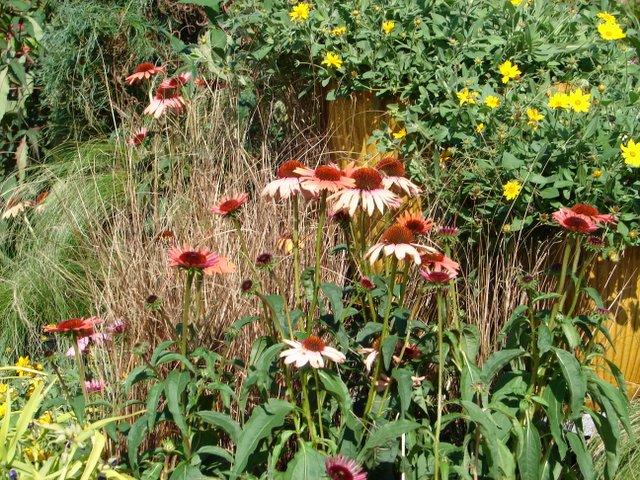
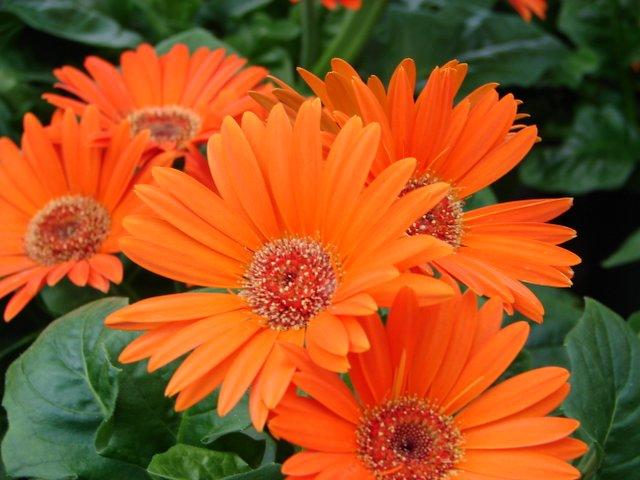
A sad farewell to the bright colors of the growing season. Many of the annual flowers sustained heavy frost damage Wednesday night. Bookmark this flower for the long, cold winter days which lie ahead.  Posted by Picasa
Leaving port and heading downriver from Kimmswick, Missouri. Watts Bar Belle Posted by Picasa
St. Louis is noted for its roots with the Mississippi River. Recently snapped
several pictures of a stern wheeler passing through St. Louis. The boat was in transit
from LaCrosse, Wisconsin to Knoxville, Tenn. Captain Greg and seaman Tom were leaving from Hoppy's in Kimmswick, Missouri. This is an actual (working) stern wheel paddle boat a replica from a by gone era. For some great paintings of Mississippi and Missouri River paddle boats check out garylucy.com. Posted by Picasa
THE OLD SIGN PHILOSOPHER, THOUGHT FOR THE DAY!

A FRIEND IN NEED....IS A FRIEND TO DODGE

TOMORROW MAY COME.....IT USUALLY DOES

XXXXXXXXXXXXXXXXXXXXXXXXXXXXXXXXXXXXXXXXXXXXXXXXXXX

OCTOBER PERENNIAL SALE OFFERING 50% OFF IS COMING TO A CLOSE. OCTOBER 31ST IS THE LAST DAY OF THE SALE. THIS SALE HAPPENS ONLY ONCE A YEAR AND WHEN ITS OVER, ITS OVER. WE STILL HAVE A GOOD SUPPLY OF PERENNIALS INCLUDING SOME OF ST. LOUIS' FAVORITES, INCLUDING STELLA DE ORA DAYLILLIES, SCABOSIA, COREOPSIS AND YARROW. **NO COUPON NECESSARY**

SPECIAL MUM SALE............BUY ONE, GET ONE FREE. SELECTED 2 GALLON GREENSCAPE GROWN MUMS ONLY. AVAILABLE IN RED, WHITE AND ROSE ONLY. THIS WEEKEND ONLY. PLANT THEM NOW FOR NEXT YEAR.

XXXXXXXXXXXXXXXXXXXXXXXXXXXXXXXXXXXXXXXXXXXXXXXXXXX

WINTER PREPARATION OF TROPICALS

With the recent frost experienced in St. Louis, its time to put away the tropicals for the year. Some tropicals are not worth the effort to save from year to year, so you must make a decision yourself on which plants you want to save. The most frequently overwintered tropical plants include the banana, elephant ear, hibiscus and gardenia.

BANANA TREES

There are two different classifications of bananas in the St. Louis area. The hardy banana (musca baja) and the tropical banana (cavandish). The hardy banana tree can survive to temperatures of -17*. The best way to winterize them is to simply cut the main stalk down after a killing frost and mulch over the area. Simple and easy.

The tropical banana requires quite a bit of work. Several choices are available for winterization. Cut the plant down, dig up the root ball and store in cool temperatures (basement away from any heat sources). OR Don't cut down the plant, dig up the root ball and transplant into a large pot and continue growing the plant throughout the winter in a sunny, heated area. OR Once again, don't cut down the plant, dig up the root ball, remove all the soil and store in cool temperatures.

ELEPHANT EARS

Cut down the elephant ears at the base of the plant and dig up the root ball. Store in the basement away from any heat sources. Do not store the bulbs in plastic bags. We recommend storing them in old panty hoses and hang them from the rafters in the basement. Burlap bags will also work but don't put too many in one bag.

When temperatures raise in the spring the following year, replant the elephant ears in rich, well drained soil.

TROPICAL HIBISCUS

This is one plant, I recommend discarding at the end of the season. Treat the tropical hibiscus as if it was an annual flower. This particular plant is a haven for white fly and aphids and could therefore affect the health of all your indoor plants. BUT If you insist on saving the hibiscus, hose the foliage off and spray the plant with an all purpose insecticide application. Place the plant in an area which receives moderate to strong sunlight. Occasionally water the plant and inspect for insect activity weekly. The hibiscus will probably lose its foliage during the course of the winter inside your home and will become infected with insects. "We do not overwinter any hibiscus at the garden center".

GARDENIA

The gardenia is identical to the hibiscus. I do not recommend overwintering this plant because of the severe insect problems associated with it. But, if you insist do the same procedures as the tropical hibiscus.

Tips to remember or consider. Do not overwater during the winter, keep slightly moist. DO NOT FERTILIZE DURING THE WINTER. Store in an area that does not drop below 40*. Store your plants away from any direct heat sources (furnace, fireplace, heat ducts). Monitor the plants for insect activity at least weekly. If an insect problem occurs, spray immediately. Good luck, winter doesn't last forever.

Wednesday, October 19, 2005

Night scene of the water feature at Greenscape Gardens. We have created several large permanent display gardens at the garden center. NO OTHER GARDEN CENTER IN ST. LOUIS OR ST. LOUIS COUNTY HAS MORE DISPLAY GARDENS THAN GREENSCAPE GARDENS. We are creating a garden center environment with mature plantings to encourage the St. Louis gardener to "stop and smell the roses". The koi/goldfish pond pictured here is just another example of our commitment to the St. Louis gardening public. Posted by Picasa
ANOTHER NEW SELECTION DISPLAYED AT THE EASTERN PERFORMANCE TRIALS IN SEPTEMBER.

This is one of the many new varieties of annuals and perennials, you'll find at Greenscape Gardens in 2006. We have made a committment to bring new and exciting cultivars of flowers, trees, and shrubs to the St. Louis market.  Posted by Picasa
OCTOBER PERENNIAL SALE...... ............................50% OFF ALL REMAINING PERENNIALS

Looking to create the perfect perennial garden next year. Start this year with 50% off all remaining perennials. We have a good selection of shade and sun loving perennials.

Why is now a good time? The first reason is you'll save 50% on your perennials purchases. But you must hurry, since the supply is limited and the sale ends on October 31st, 2005.

The second reason is simple. The old saying "Fall is for Planting" creates great gardens. Planting in the fall encourages deep root development. The perennial will be more established since it has been developing an extensive root system all winter. There is no undue stress on the plant. As long as the ground isn't frozen, the plant is growing and developing a mature root system. Posted by Picasa
THE OLD SIGN PHILOSOPHER, THOUGHT FOR THE DAY!

FAMILY TREES, SOMETIMES PRODUCES NUTS!

XXXXXXXXXXXXXXXXXXXXXXXXXXXXXXXXXXXXXXXXXXXXXXXXX

WHAT'S GOING ON AT THE GARDEN CENTER

With the great weather we have been experiencing this past week, we have been extremely busy servicing the landscapers and homeowners with their fall landscape purchases. We still have a good selection of mums, pansies, kale and Proven Winner fall annuals.

Only 12 days remain for the great October Perennial Sale. Yes we still have a fair selection of perennials still available at 50% off. The stock has diminished greatly but we still have coreopsis, daylillies, scabosia, hostas and even a few butterfly bushes. "No coupon needed" for these great savings.

Only 2 Saturdays remain for Starr BBQ. Dave Starr has been teasing us with the great aroma of smoked meats the past couple of Saturdays. Check out his mouth watering treats on Saturday with ribs, pulled pork, chicken, my favorite of pork steaks, brats and hotdogs for the kids. Open to 5 on Saturday.

xxxxxxxxxxxxxxxxxxxxxxxxxxxxxxxxxxxxxxxxxxxxxxxxxxxxxxxxxxxxxxxx

WINERIZING THE IRRIGATION SYSTEM

A good rule of thumb is to winterize sprinklers by Halloween. Most years, that’s when it starts to freeze in this area. People often forget to winterize until its too late. It’s not hard to do.

Here’s some simple procedures you can utilize to winterize your irrigation system.

Go to the backflow preventer, located inside the basement or outside near the water meter. Turn levers off so that the waterflow is stopped. The preventer should be tested before you turn the sprinklers back on in the spring, and costs at least $50. It must be serviced by a licensed backflow technician in St. Louis and St. Louis County. Insulate any above-ground piping with self-sticking foam-insulating tape or foam insulating tubes from a home-supply store.

Shut down the timer. Most controllers have a rain mode that shuts off signals to the valves. The controller continues to keep time so the programming information such as start times and valve run times isn’t lost. The only change is that the valves will not activate.

Drain the system. Open each drain valve. There should be one per zone, and a master valve for the whole system.

As an optional added precaution, insulate backflow preventers and valves if they are above ground, using insulation tape. Don’t block the air vents and drain outlets on backflow preventers.

The sprinkler system should be shut off until March or April. That’s usually when you find out if you have any problems like a leak from incorrect winterization.

xxxxxxxxxxxxxxxxxxxxxxxxxxxxxxxxxxxxxxxxxxxxxxxxxxxxxxxxxxxxxxx

NOAA ANNOUNCES 2005-2006 U.S. WINTER OUTLOOK

NOAA announced the 2005-2006 U.S. Winter Outlook for the months of December, January and February. NOAA forecasters expect warmer-than-normal temperatures in most of the U.S. The precipitation outlook is less certain, showing equal chances of above, near or below normal precipitation for much of the country.

"Even though the average temperature over the three-month winter season is forecast to be above normal in much of the country, there still will be bouts of winter weather with cold temperatures and frozen precipitation," said retired Navy Vice Admiral Conrad C. Lautenbacher, Jr., Ph.D., undersecretary of commerce for oceans and atmosphere and NOAA administrator.
NOAA does not expect La Niña and El Niño/Southern Oscillation (ENSO) to play a role in this winter's forecast. Without ENSO, forecasters look to other short-term climate factors, like the North Atlantic Oscillation, in determining the overall winter patterns. Under these conditions there tends to be more variability in winter weather patterns across the nation, especially in the Great Lakes region and the northeast U.S.

The Outlook

The 2005-2006 U.S. Winter Outlook calls for warmer-than-normal temperatures across much of the central and western United States, including Alaska and Hawaii. The Midwest, the Southern Californian coast and the East Coast have equal chances of warmer, cooler or near-normal temperatures this winter.

The precipitation outlook calls for wetter-than-normal conditions across most of Arkansas, Louisiana, Oklahoma, and northeastern Texas. Drier-than-normal conditions are expected across the Southwest from Arizona to New Mexico.

As winter approaches, nearly 20 percent of the nation is in some level of drought compared to around 30 percent of the country this time last year as defined by the U.S. Drought Monitor. For the sixth year in a row, drought remains a concern for parts of the Northwest and northern Rockies. Wet or dry conditions during the winter typically have a significant impact on drought conditions. Winter-spring snow pack is particularly important in the West, as much of the annual water supply comes from the springtime snow melt. NOAA cautions it would take a number of significant winter snowstorms to end the drought in the Pacific Northwest and northern Rockies.

What Could Drive This Winter's Weather?

Since early 2005 sea-surface temperatures in the central-equatorial Pacific Ocean have been near normal. Near normal sea-surface temperatures in the central-equatorial Pacific Ocean are expected to continue for the next three to six months. Therefore, it is unlikely that either the El Niño or La Niña phases of the El Niño/Southern Oscillation (ENSO) cycle will be present during the upcoming winter. As a result, one key climate feature that could have a particularly large impact in U.S. winter weather, especially along the East Coast, is the North Atlantic Oscillation or NAO.
The North Atlantic Oscillation often changes its phase from week-to-week. During the positive phase, the jet stream shifts to the north of its usual position and the winter weather features relatively warm days over much of the contiguous U.S. In contrast, during the negative phase the jet stream shifts to the south of its usual position. The negative phase of the NAO features more Nor'easters and more frequent cold air outbreaks and snowstorms, especially along the East Coast. Currently, the phase of the NAO is difficult to anticipate more than one to two weeks in advance.

Recognizing the demand to have more precision with seasonal outlooks, the NOAA Climate Prediction Center has formed a Climate Test Bed. The Climate Test Bed is a collaborative scientific effort among the operational, academic and research communities. The mission of the Climate Test Bed is to accelerate the transfer of atmospheric and oceanic research and development into operational climate forecasts, products and applications. At present the Climate Test Bed is focused on maximizing the use of the NOAA Climate Forecast System model in combination with other climate forecast tools to improve U.S. seasonal precipitation and temperature outlooks.

Tuesday, October 18, 2005

Eastern Performance Trials Pictures

Topiary plantings at Virginia Growers. The whimisal dragon of sedum was displayed at the grounds of Virginia Growers. Notice the hens and chicks on the backside of the dragon. This entire display was quite attractive and was something you normally think of as "Disney".
 Posted by Picasa

Friday, October 14, 2005

THE OLD SIGN PHILOSOPHER, THOUGHT FOR THE DAY!

TODAY'S WEATHER COURTSEY OF
GREENSCAPE GARDENS!!

This weekend is shaping up to be incredible. The weather will be delightful and the Gardens will be hopping. We've been busy all week with new shipments of shrubbery, fall magic annuals, and pansies. Plus we still have a good selection of Greenscape Grown mums.

Looking for the greatest selection of pumpkins in town. Look no further. We have another five tons of pumpkins for the weekend. If you're looking for the most unusual pumpkin, check out our ghost pumpkins. We also have straw bales, corn stalks and ghords.

Perennials will be on sale again this weekend at 50% off. The selection is dwindling but you should be able to find some great plants and deals.

Bring a hardy appetite to the Gardens again this weekend. Dave Starr will be BBQ'ing again this weekend at Greenscape Gardens. Ribs, brisket, pork steak, pulled chicken and all the fix'ins.

With weather like this....................Come to Greenscape Gardens!!!  Posted by Picasa

Wednesday, October 12, 2005

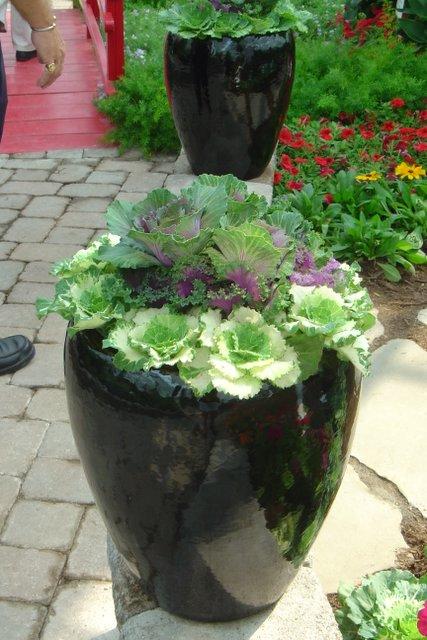
Kale Brassica oleracea Crane Series by American Takii. This long stem cabbage looks good as cut stem and appears to be almost a stiff rose form. This plant will provide long lasting color for arrangements. Once color has developed, stop fertilization and harvest around mid-November. It is also necessary to remove the lower leaves when the plants reach about 10" tall and repeat 3 or 4 times as they are growing. Posted by Picasa
THE OLD SIGN PHILOSOPHER, THOUGHT FOR THE DAY!

GO CARDINALS!

OFFICIAL MUM COUNT 1324

XXXXXXXXXXXXXXXXXXXXXXXXXXXXXXXXXXXXXXXXXXXXXXXXXXX

October is "PERENNIAL TIME" at the garden center. All perennials are half off. Now is the time to fill in those gaps in the perennial garden. Remember, when you plant in the fall......all you ask of the plant to do is develop a root system. Perennials planted in the fall of 2005 will be stronger and more developed than those planted in the spring of 2006. We plant hundreds of perennials every year in our display gardens and they put on a "great show" the following year.

THE OLD SAYING....."FALL IS FOR PLANTING".....BUT ITS ALSO FOR SAVING MONEY!

XXXXXXXXXXXXXXXXXXXXXXXXXXXXXXXXXXXXXXXXXXXXXXXXXXX

THREE ROSES NAMED 206 AWARD OF EXCELLENCE WINNERS BY AMERICAN ROSE SOCIETY

Three roses----'Caliente', Baby Boomer' and 'Iced Rasberry'---have been named 2006 Award of Excellence winners by the American Rose Society. Also known as the "Royal E", the Award of Excellence is a designation of merit given to new miniature and mini-flora rose varieties of superior quality and marked distinction as determined by their performance in official test gardens. Since the inception of the award 31 years ago, 92 roses have received the designation.

To evaluate new varieties, three plants of each entry are sent to the eight AOE public test gardens and two to five private gardens of members of the ARS Miniature/Mini-Flora Rose Committee. Each public garden has an AOE supervisor and five evaluators. Thus, more than 40 evaluators judge the entries in the AOE trials. The gardens, public and private, are spaced geographically across the United States so as to include most growing zones. Each evaluator judges each entry four times during the growing season for two years. Every year the Miniature/Mini-Flora Committee decides, by vote, the number of awards to be made, with a maximum of five per year.

All commercial and amateur hybridizers are eligible and invited to enter unnamed seedlings or sports of the miniature or mini-flora varieties in the AOE trials. A fee of $10 per entry is collected with a limit of five entries per hybridizer per year. Thirty-four healthy plants of a variety are necessary to enter the trials, and entries may not be registered or introduced commercially during the testing period. For more information on entering the trials, contact the American Rose Society at 1-877-ROSE911 or ars@ars-hq.org.

'Caliente' (BENdiez)

This dark red miniature with medium red reverse has long lasting, exhibition-form blooms borne singly on long stems. With an upright habit, 'Caliente' reaches 24 inches in height. It has dark green, semi-glossy foliage and benefits from removing spent blooms. This variety has about 31 petals and moderate rasberry fragrance. Its parentage is 'Ruby' X 'Timeless'. 'Caliente' was hybridized by Frank Banardella and will be introduced by Nor'East Miniature Roses.

'Baby Bloomer' (JACseboy)

This medium pink miniature has single blooms borne in clusters on a low-growing, compact plant. The blooms are bright pink with a light, spicy fragrance and hold their petals very well. It is very floriferous and tends to be blackspot resistant. Its parentage is unnamed white seedling X 'Boy Crazy' (DICrevival). 'Baby Bloomer' was hybridized by Keith Zary and will be introduced by Jackson & Perkins.

'Iced Rasberry' (SAVaras)

A red blend miniature with raspberry red petals and white reverse, 'Iced Raspberry' has a petal count of 44 to 54. Blooms are borne singly, unfurl slowly, have slight fragrance and have both decorative and exhibition potential. Parentage is 'Jilly Jewel' x unnamed seedling. 'Iced Raspberry' was hybridized by Wendy White and will be introduced by Nor'East Miniature Roses. This is White's second AOE winner in two years.

For more information about roses contact www.ars.org

xxxxxxxxxxxxxxxxxxxxxxxxxxxxxxxxxxxxxxxxxxxxxxxxxxxxxxxxxxxxxx

CUT FLOWER VARIETIES TO CONSIDER IN YOUR GARDEN

Cut flower gardeners are always looking for something new. Here are a couple of new varieties that perform well in St. Louis.

Zinna Zinnia elegans 'Uproar Rose' and 'Zowie Yellow Flame' by Goldsmith Seeds, Inc. Both have reported vase-life of approximately two weeks. 'Uproar Rose' is supposedly as resistant to powdery mildew as Benary cultivars. 'Zowie' is a real eye catching cut flower and even though it is medium in size it is still worth adding to your Zinnia collection for 2006.

Calla Lily Zantedeschia x rehmanii 'Edge of Night' by Terra Nova is grown for both its nearly-black flowers and its white spotted foliage. Although it is not winter-hardy in our climate, it will survive outdoors where temperatures rarely drop into the twenties.

Ninebark Physocarpus opulifolius 'Diablo', Shrub with dark purple foliage and orange fall color. It has white flowers in June and July followed by red seeds that remain for several weeks. This plant prefers full sun and acidic soils. It can grow to a height of 6-12 feet, but requires pruning in order to stay bushy. Check out the "Ninebark Diablo" display in the Dougherty Ferry Garden at Greenscape Gardens.

Thursday, October 06, 2005

THE OLD SIGN PHILOSOPHER, THOUGHT FOR THE DAY!

OFFICIAL MUM COUNTDOWN! DRUM ROLL PLEASE......2458

XXXXXXXXXXXXXXXXXXXXXXXXXXXXXXXXXXXXXXXXXXXXXXXXX

Check out the garden center this week. With great autumn temperatures predicted for the weekend, now would be a great time to check out our mum selection (before they're gone). We also have thousands of pumpkins, ghourds, clay pumpkin statues and straw for setting up your seasonal display.

If that isn't enough........come to Greenscape Gardens this weekend with an empty stomach because the greatest BBQ in the world is being cooked up by STARR BBQ. Yes, Dave Starr from the Kirkwood Farmers Market is creating the best BBQ for your culinary needs. Great BBQ at a great price.

If these offers aren't enough to tempt you......how about the annual 50% off perennial sale. Sorry mums and groundcovers are not included.

xxxxxxxxxxxxxxxxxxxxxxxxxxxxxxxxxxxxxxxxxxxxxxxxxxxxxxxxxxxxxx

The calendar has now officially confirmed that it is autumn, and the recent round of rains that swept across the state have provided some relief from the dry conditions that persisted in many areas. With the added soil moisture it should be much easier to core aerate to alleviate compaction, and improve turfgrass rooting. So gentleman....start your aerifier engines!

If you did not apply fertilizer around Labor Day, do it now to help improve your turf for next year. If you apply fertilizer now you probably should apply the late fall application in mid November.

What about late fall fertilization?

An effective late fall fertilization will benefit the turf by producing carbohydrate, encouraging early spring root growth, providing good fall and spring color and improving turf density so the turf will better compete with weeds next spring. The late fall fertilization is always a challenge for timing because it’s really tough to figure out when fall stops and winter begins. The rule of thumb is to keep a close eye on when the turf stops growing. When top-growth stops, that’s the time to put down that late fall fertilizer. Always make sure to apply the late fall application in advance of when the soil freezes, you never want to apply fertilizer to a frozen soil. Also, use fertilizers that have a high percentage of fast release/water soluble nitrogen because we want to have the nitrogen taken up by the plant quickly so it can start storing carbohydrates before winter sets in.

Still time to seed?

This is always a tough one because as with many things, it depends. You can certainly still put seed down and you’ll get germination and emergence, the challenge is that as we move closer to November the amount of time those young seedlings have to mature before winter arrives becomes shorter and shorter. Young seedlings are more susceptible to winterkill. If you intend to still seed, do it this weekend.

Broadleaf weed control

October and early November are the ideal time to control broadleaf weeds because the weeds are storing carbohydrates in their root system and are more susceptible to herbicide applications. So if your turf is being overtaken by a wide array of broadleaf bandits, applying an herbicide now could make the difference for next year. Apply the herbicides on a sunny day when rain is not in the forecast for 24 hours. We want the herbicides to dry on the leaf surfaces and not be immediately washed off. Also, make sure the turf is actively growing, cool weather and timely rains in the last week should ensure active growth in most areas. The reason we want to see actively growing turf and weeds is that if they are sitting dormant those herbicide applications won’t be very effective. There are many different herbicides that could be used including the most common three-way broadleaf weed control mixtures. Always follow all label recommendations. The greatest shortcoming of killing broadleaf weeds at this time of year is that you really don’t get to watch them die. In many cases you may not see the obliteration of these weeds this fall but next year they won’t be there or will at least be reduced in numbers.

Mulching leaves

The leaves are changing and soon they’ll be a falling, which means it’s time to start mulching. If you’re still of the belief that you need to rake leaves, come on over to the mowing side. Here’s what you need to know to successfully mow leaves into the turf. First of all make sure your mower has a sharp blade. After a long season of mowing, the blades may be dull at this time of year and trying to chop up leaves will be more challenging with a dull blade. Second, raise the mower as high as it will go and mow at your normal speed, don’t “rev” the throttle to the high jackrabbit setting and blaze around the yard. Try to mow the leaves when they are moist from the morning dew but don’t mow them when they’re really wet. This will prevent the leaves from blowing all over the place and will help with your allergies. Finally, don’t let the leaves pile up too high before you mow. Too high would probably be greater than 3 to 4 inches of leaf depth on the turf. Mulching leaves helps the turf by returning nutrients and organic matter. After a nice rain shower you usually can’t even tell that you mulched the leaves into the turf.

Thursday, September 29, 2005

The first stop on the Eastern Performance Trials was Conard Pyle in Westgrove PA. The displays provided by Conard Pyle and other companies was quite impressive. The tour of the nearby growing facility was equally impressive. The following blog was compiled from my recent "worldwind tour" of six different growing facilities, garden centers and horticultural sites on September 21, 22 & 23rd. The displays were built for a one week garden tour by personnel in the horticultural field. I personally was rewarded with many new ideas which I will utilize at Greenscape Gardens. Many new plants were introduced at the Eastern Performance Trials and we will be the first to introduce to the St. Louis marketplace. I drove close to 1000 miles in 3 days to view these outstanding gardens, you'll be able to view my "garden" in minutes but many of these "gardens" will be coming to Greenscape Gardens in the future.

Greenscape Gardens
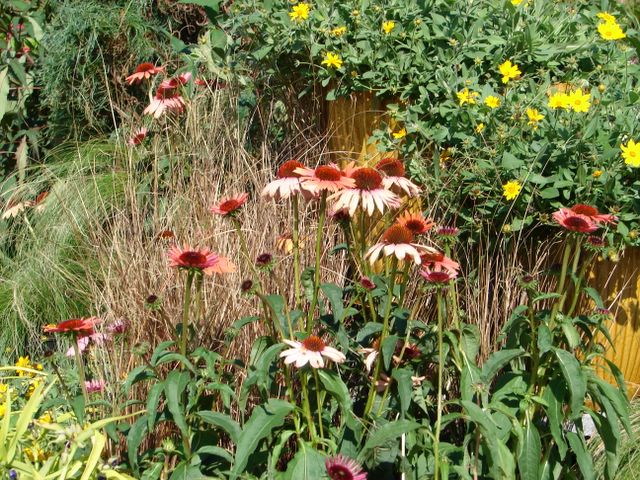
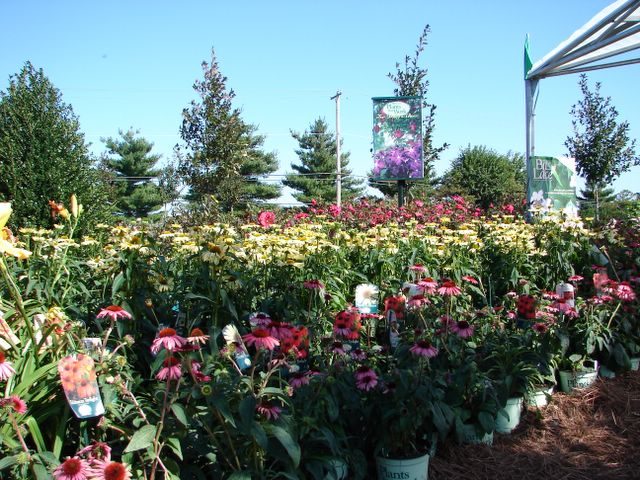
Purple coneflowers.

Greenscape Gardens
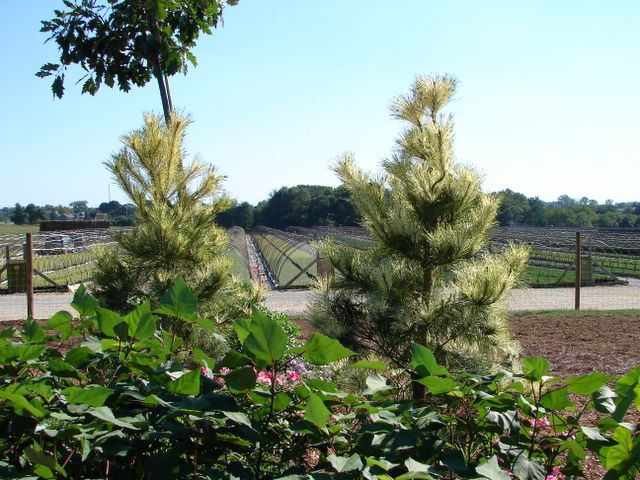
The pines in the foreground are unique but check out the background. This is Conard Pyle's growing farm with 600' long poly houses stretching into the distance.

Greenscape Gardens
Tiger Eyes Rhus at Conard Pyle.

Greenscape Gardens
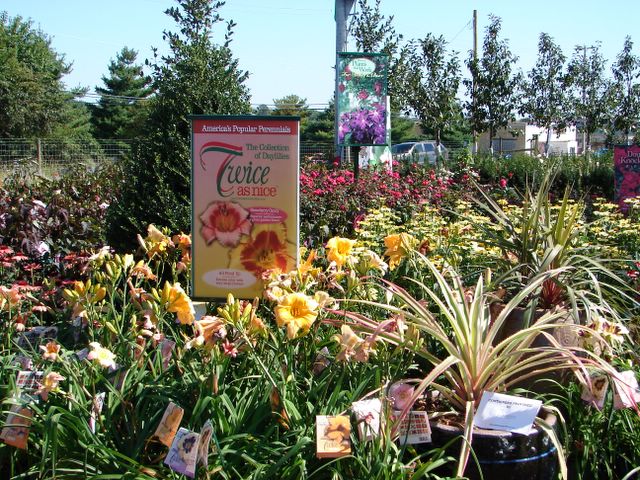
Great display gardens and signage was outstanding at Conard Pyle.

Greenscape Gardens
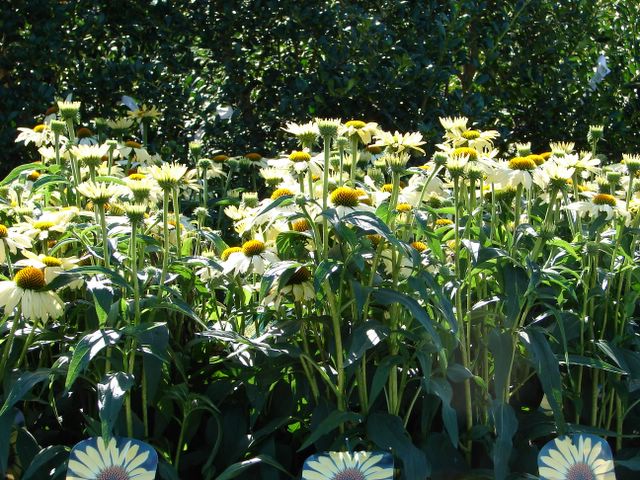
Coneflowers galore.

Greenscape Gardens
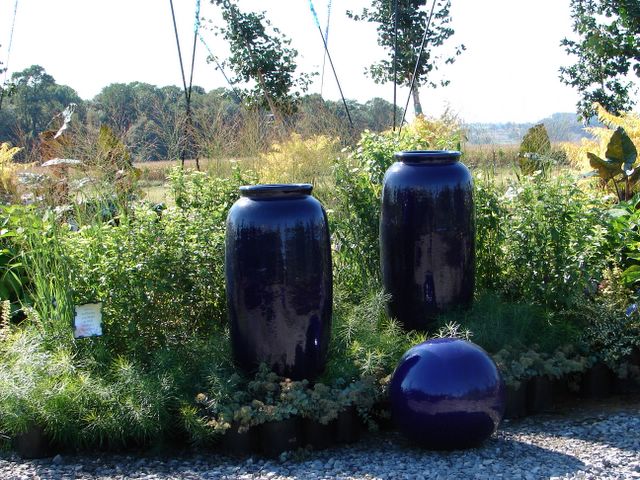
Awesome containers with gazing ball in the foreground with an array of ornamental grasses and other tropicals creating a great display.

Greenscape Gardens