Friday, March 03, 2006

Coming soon:

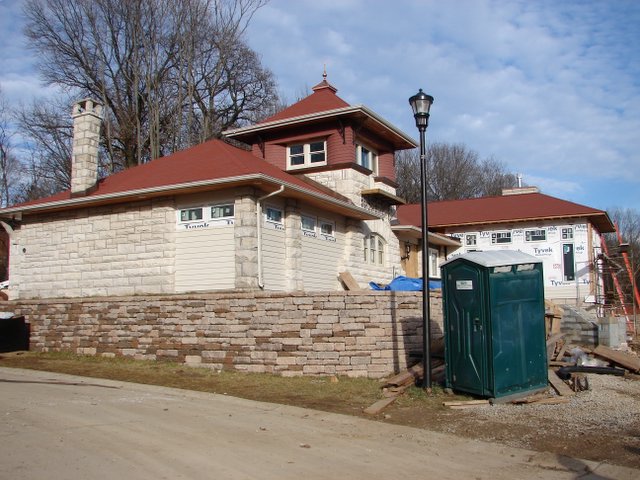
The rebirth of the Frisco Station in Kirkwood. Agape Construction has taken on the most interesting project. Renovating the Old Frisco Station into a residence. This project is actually KMOV's Showcase Home. We will keep you updated on this incredible project.


 Posted by Picasa
NEWS FLASH.........NEWS FLASH............ NEWS FLASH

Just when you thought you heard it all. Believe it or Not.... A DUI on a Lawn Mower

A man was arrested and charged with DUI for riding a 1968 Cub Cadet lawn mower on a Vermont highway.

If you think a riding mower isn’t legally considered a motor vehicle, you might want to check your state statutes. A Hydeville, Vt. man was recently arrested and charged with drunken driving for allegedly riding a 1968 Cub Cadet lawn mower on a city road while intoxicated.
The 47-year-old man was already facing his fourth charge of drunken driving and was previously released on the condition that he stop drinking. His lawyer, Katie Smith, told the Rutland Herald that Jensen was “not aware that a lawn mower rose to the level of a motor vehicle.”

According to the Vermont DUI statute, “A person shall not operate, attempt to operate, or be in actual physical control of any vehicle on a highway…when the person’s alcohol concentration is 0.08 or more.” Tests revealed Jensen had a blood-alcohol level of 0.16. The moral of the story:

If you’re kicking back with a few cold ones, leave all the keys at home.
CHESTNUT BLIGHT

Prior to the chestnut blight, one in four hardwood trees in Pennsylvania was a chestnut, according to the American Chestnut Foundation. Mature chestnuts grew to 100 feet tall, and many specimens reached 8-10 feet in diameter. Wildlife including birds, bears, squirrels and deer depend on the tree's abundant crop of nutritious nuts.

Tree expert Tim Phelps is confident that blight-resistant chestnuts are not only possible, but almost here. Blight wiped out virtually all American chestnut trees in North America after it showed up in New York in 1904. Now, seven decades of crossing blight-resistant Chinese chestnut trees with American chestnut trees, and then repeatedly back-crossing the progeny with other American chestnuts, has created 200 hybrids. The trees are now being tested in the Arboretum at Penn State with inoculations of the fungus that causes chestnut blight—with promising results.

Phelps, of the College of Agricultural Sciences and president of the Pennsylvania Chapter of the American Chestnut Foundation, is supervising the project. He explained how the years-long process works. “After a thorough screening process, the trees that show total resistance to the blight will be selected as parents of the seed that will be used to reintroduce American chestnuts into the forests of the Mid-Atlantic region,” Phelps said. “All the progeny of the trees selected after inoculation will be blight resistant. We are that close.”

The process starts with small wounds made on the test trees, using a spatula to apply blight-causing fungus from a Petri dish. The wounds are then taped to be sure the fungus stays moist and active. Young trees that are not blight resistant will begin exhibiting signs of decline in a month or so.

Final tree selection at the arboretum will occur in May. After five generations, one of every 64 young trees at the arboretum exposed to the blight should be highly blight resistant. Seed from trees selected after those inoculations around the Mid-Atlantic region will eventually be planted in The Arboretum at Penn State until the orchard numbers more than 30,000 hybrid chestnut trees.

These trees are the direct descendants of a 1935 cross between a Chinese and an American chestnut. The first-generation back-cross to American chestnut was made in 1946.
The chestnut was a superb timber tree. It grew straight and often branch-free for 50 feet or more. Loggers tell of loading entire railroad cars with boards cut from just one chestnut tree. Straight-grained, lighter in weight than oak and more easily worked, chestnut was as rot resistant as redwood. It was used for virtually everything—telegraph poles, railroad ties, shingles, paneling, fine furniture, musical instruments and even pulp and plywood.

In North America, pollen records from the latest interglacial period show that the American chestnut tree, Castanea dentata, was present on Long Island 30,000 to 50,000 years ago. American chestnut trees were once found all along the Appalachian mountain range, from Portland, Maine to northern Georgia. In the last 150 years it has been planted outside its range in favorable spots (Michigan, Wisconsin) where it has become a forest tree, protected from chestnut blight disease by geography until only recently.
NATURAL LAWN CARE ALTERNATIVES

More and more communities are asking the question. Are pesticides and herbicides safe for residents and the environment?

On Jan. 1, 2005 the Environmental Protection Agency, or EPA, banned the pesticide diazinon for residential use. Manufacturers had called the chemical safe for many years, but accumulating evidence suggested otherwise.
New research is calling into question similar claims for herbicides. Landscape maintenance people have long been attracted to the chemicals, which zap weeds that invade space between bricks and other material. The most common herbicide used by landscape workers is glyphosate, usually sold under the trade name Roundup. Glyphosate is the subject of new interest among researchers. Called “practically nontoxic” by manufacturer Monsanto, recent studies suggest links between the substance and reproductive problems in humans and animals.

Published this August, two new studies show that relatively low levels of glyphosate kill most tadpoles in affected ponds. The research was conducted by Prof. Rick Relyea of the University of Pittsburgh.

“The most striking result from the experiments was that a chemical designed to kill plants killed 98 percent of all tadpoles within three weeks,” Relyea said.

Landscape workers who choose to use glyphosate-based herbicides should follow all manufacturer instructions carefully.

Interesting, other studies suggest that the herbicide glyphosate itself isn’t to blame. An accompanying “surfactant” in Roundup, which helps the herbicide penetrate leaves, seems to be responsible.

Previous studies, one from Canada and one from France, suggest that an increased risk of human reproductive harm exists in communities where glyphosate compounds are heavily used. Other research is not tied directly to glyphosate or Roundup, but suggests that higher cancer rates accompany landscapes where chemical use is high. At least one study found elevated cancer rates among golf course superintendents (who oversee hundreds of pounds of chemical applications each year). Another study (Purdue University, 2004) found higher rates of bladder cancer in dogs whose owners used the most lawn chemicals.

To be sure, glyphosate and other products on the market have been extensively tested and are unlikely to cause immediate harm to users. But the new research suggests there are consequences to using the substances.
In response, many communities are putting together local ordinances that ban or restrict residential chemical use. Some landscape maintenance companies are even starting to market their services as “organic” or “chemical-free.”

Wisconsin’s Jim Sommerfeld, for example, runs a business called Happy Lawn that avoids pesticides and herbicides and uses corn gluten meal in the place of industrial fertilizers.

To go chemical-free, customers have to accept a few dandilions, Sommerfeld told Madison, Wis.’s Capitol Times.
“A lot of people still have the mind-set that they want a perfectly-green, weed-free, golf-course type of lawn,” he said.
At least one organization is spreading word of the benefits associated with chemical-free landscapes. The group is called beyondpesticides.org.

The BP web site offers a number of practical tips to keeping a garden healthy without chemicals. Regarding lawns, the group says that a lawn kept healthy will tend to keep pests and weeds to a minimum. In short, keep your lawn aerated and pH-balanced, and it will have fewer weeds.

Greenscape Gardens is now retailing a new line of natural organic lawn care products. If you're concerned about the environment, these new products are well worth looking at.

Thursday, March 02, 2006

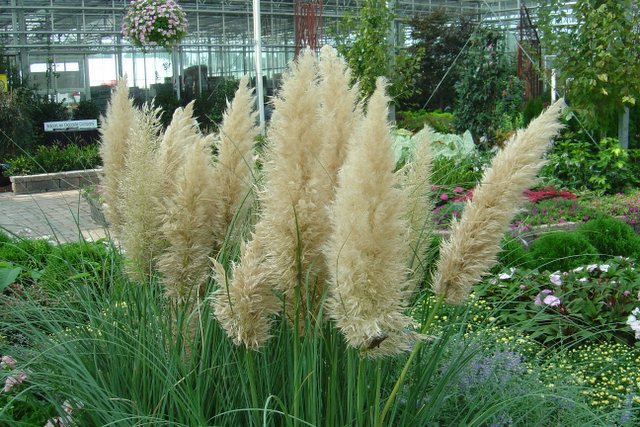
Once again the rave in the St. Louis gardening scene...........Ornamental grasses. We are growing more than 20 different varieties of perennial ornamental grasses. In another couple of weeks (normally St. Patrick's weekend) I highly recommend cutting back the spent shoots from last year. Cut the plants down to within 3-4 inches from the soil. This will make the plant much more attractive for this year. One of the tricks that we use at the garden center is to put black plastic over the plants and secure the plastic with bricks in the corners to secure the plastic. Wait 10-14 days and take off the plastic. This will warm up the soil around the grasses and they will grow much quicker in the early spring. Posted by Picasa
The greenhouses are starting to show signs of spring. The last couple of weeks, the planting team has planted over 10,000 perennials, 1000 hanging baskets, 1300 Knockout Roses, and some of the best looking container gardens in St. Louis. We're open during the weekends. Come by and say HI!  Posted by Picasa
New Herbicide Targets Wild Violets

Wild violets can quicly take over lawns in the St. Louis area. Give this weed an inch and it'll take a yard. A relatively new herbicide can be used on turf to control wild violets and many other hard-to-control broadleaf weeds. It’s called carfentrazone. This material is rain-fast in three hours, and you can reseed the treated area two weeks after application. For violet control, it needs to be used in early to mid-April, when the violets are just starting to grow.

Sold as SpeedZone, it has been used in the professional lawn-care industry with exceptional results. It’s now available at Greenscape Gardens. We used the product at the garden center last year and had great control on some hard to control wild violets. “While low levels of chemical residue may occur in surface and groundwater, the risk to non-target plants or animals is low,” the EPA fact sheet on the substance states. “Carfentrazone is considered to be practically non-toxic to birds. The chemical is moderately toxic to aquatic animals.

The best time to apply SpeedZone is when the wild violets first reappear in early spring. One application normally will eradicate these unwanted weeds. It is heat sensitive. We highly recommend its usuage in early spring before temperatures reach into the 80's. Finally a herbicide that eliminates violets.
The Society of Municipal Arborists has named the Kentucky coffee tree its 2006 Urban Tree of the Year. The tree won votes from members across the U.S. and Canada with its combination of low maintenance and attractive limbs. According to member Nina Bassuk of Cornell University, “the pods are the only drawback… the tree is quite striking in winter with the gothic appearance of its limb structure.”

This tree is twice pinnately compound with leaves up to three feet long. Each compound leaf is composed of about 70 leaflets.

Kentucky coffee tree grows on a wide variety of sites and soils. It prefers rich, moist soils in floodplains, terraces, ravines, coves, and lower slopes. Its most common associates include maples, ashes, hackberry, black walnut, butternut, honeylocust, and bitternut hickory. On better sites, its growth rate is moderate (1 to 2 feet per year). Kentucky coffee tree is only moderately tolerant of shade and requires openings for successful regeneration. It is one of the last trees to leaf out in the spring; new leaves are often tinged with pink as they change to dark green. Fall color for this species is yellow to brown. The seeds used to be used as a substitute for coffee and were called coffee-nuts.

This very rough, coarsely branched tree grows to a height of 40-60 feet with a trunk diameter of 3 feet. The bark is very rough, very light or dark brown, with thin scales. The dull deep green leaves are doubly compound, with about 9 broad oval-shaped leaflets that are pointed and toothless. They are alternate and there is a pair of single leaflets on the base of the main stalk. There are male and female trees, which produce their flowers in white, nodding clusters, and bloom in May to June. The fruit is a broad, leathery, dark brown pod, 4-9 inches long, pulpy inside with several seeds, and stay on in the winter. The seeds used to be used as a substitute for coffee and were called coffee-nuts. Kentucky coffee tree should be used more in the landscape. It will grow on a wide range of soils from limestone, clay, and soils which may be droughty. It is relatively free of insect and disease pests.

The Kentucky coffee tree is found in the St. Louis area in only a handful of locations. If there is sufficient interest in the tree, we will procure some for the upcoming season. Contact us at greenscapegardens@yahoo.com

Wednesday, March 01, 2006

THE OLD SIGN PHILOSOPHER, THOUGHT FOR THE DAY!

INDECISION.....MAY........OR........ MAY NOT BE A PROBLEM
THE OLD SIGN PHILOSOPHER, THOUGHT FOR THE DAY!

OPEN 7 DAYS A WEEK.....INCLUDING WEEKENDS

Friday, February 24, 2006

THE OLD SIGN PHILOSOPHER, THOUGHT FOR THE DAY!

SUCCESS IS NEVER FOREVER
& FAILURE ISN'T FATAL
THE OLD SIGN PHILOSOPHER, THOUGHT FOR THE DAY!

GARBAGE IN............COMPOST OUT

Thursday, February 23, 2006

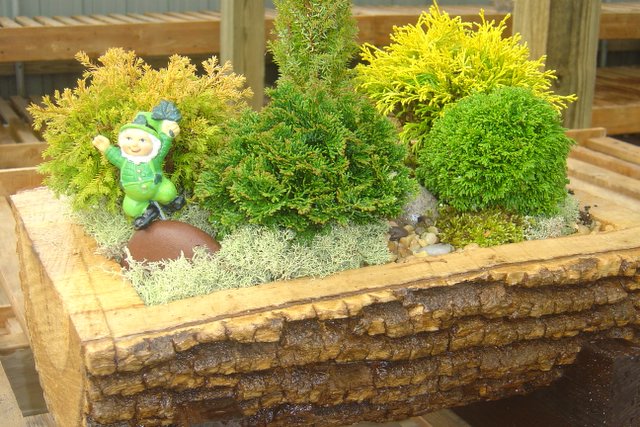
BRING THE OUTSIDE, INDOORS WITH MINIATURE CONIFERS. THIS IS THINKING OUTSIDE OF THE BOX BY UTILIZING A TREE PLANTER FOR A CONTAINER. Posted by Picasa
ADVENTURE AWAITS AT THE NEW DORIS I. SCHNUCK CHILDREN'S GARDEN OPENING AT THE MISSOURI BOTANICAL GARDEN

Grand Opening Activities Each Weekend in April; Open Daily in May

(ST. LOUIS): St. Louis's newest major family attraction, the Doris I. Schnuck Children's Garden: A Missouri Adventure, opens its gates this April at the Missouri Botanical Garden, 4344 Shaw Blvd. Explore the 19th century Missouri frontier and life along the river throughout nearly two acres designed for hands-on fun and learning, located west of the Climatron(r) conservatory.
The children of the Donald Schnuck family provided the lead gift to build the garden, named in honor of their mother.
"For many people, the understanding of science and scientific process comes from individual experience," said Garden President Dr. Peter Raven. "Through the generosity of the Schnuck family, this garden will provide a stimulating environment for the early experience of childhood wonder at the natural world."
At the Children's Garden entrance, silhouettes of Missouri Botanical Garden founder Henry Shaw, Mark Twain, Daniel Boone, Lewis and Clark, and Sacagawea introduce the garden's four central themes of discovery, adventure, botany, and settlement. The journey begins on Adventure Plaza, where a rocky bluff and cascading waterfall meet a large map of America underfoot. Here visitors choose from four paths, each leading down a unique journey.
The Discoverer's Path crosses one of two rope bridges leading to the Osage Camp. A glance at journals left by previous explorers offers insights at life among the Osage, including how early settlers interacted with the plants and animals they needed for survival. Visitors can see native wetland plants and access the nearby pond from the Discovery Platform.
Adventurer's Path begins with a glide down Spelunker's Slide to enter a rocky limestone cave where stalactites and stalagmites grow. Fossils, artifacts and petroglyphs are found inside the cool, dimly lit cavern. Children will learn how plants and animals adapt to cave life, how caves have been used for shelter and mining, and discover stones and minerals commonly found in Missouri.
River commerce is bustling at a docked steamboat, where shipments of antique goods are unloaded at the levee. Visitors can operate a series of locks to regulate the river's flow. The effects of animals and people on the environment are evident at a beaver dam and logging camp.
Along the Botanist's Path, a rustic boardwalk climbs through the treetops of mature Osage oranges planted by Henry Shaw over 100 years ago. At the center, the Tree Trunk Pavilion offers an elevated view of the entire Children's Garden. Kids can compare tree species at the three-level log Frontier Fort and learn about the uses and importance of wood. Plant and animal specimens, toys and other hidden treasures are found in the pockets of a large fabricated tree, which allows safe ascent to a tree house. At Stump Station, moveable cylinders demonstrate a tree's life cycle. Underneath, dangling roots invite children to learn about life below the ground.
Birds, bees and butterflies are attracted to the colorful flowers that grow in the petal-shaped Pollination Garden. Children can crawl inside a giant beehive to investigate its honeycombs or follow the footprints of a "bee dance." Further down the path, a trick door hidden among the hedges gains entry to a secret Victorian garden, where one can make music on sound sculptures or imagine young Henry Shaw's childhood in Sheffield, England.
The Settler's Path meanders down a country road and across a covered bridge, past a farm wagon and challenging climbing rock to the Tot Lot, where little ones can "plant" plastic veggies in the sand. Children can operate two jumping water jets and a mushroom pump in the splash area. The path leads to a Midwestern prairie village from the 1800s where food, medicine and merchandise in the general store display common examples of the plants and people connection. Displays in the surveyor's office demonstrate settlement's alteration of the natural landscape and how plants serve as eco-indicators of soil quality. In the jailhouse, invasive plants that arrived with the settlers are "locked up" in cells and identified on "most wanted" posters. Outside, gravestones mark a few of Missouri's endangered plants, reminding visitors that extinction is forever. The Town Hall serves as a central gathering area and can be rented for children's birthday parties beginning in June.
The Children's Garden will open Saturdays and Sundays in April from 9 a.m. to 5 p.m., with special grand opening activities from 10 a.m. to 3 p.m. each day. Visitors can meet the new frog mascot, appear on a video guestbook, listen to live music and buy souvenir photo buttons. The St. Louis County Library will offer a program and craft each Saturday at 12:30 p.m.
Beginning May 1, the Children's Garden will be open daily from 9 a.m. to 5 p.m. through October and open weekends only in November and March (weather permitting).
Children's Garden admission is $3 for ages three to 12, free for children ages two and under. Adult admission to the Children's Garden is free; general Garden admission applies ($4- $8).
For more information, visit www.mobot.org or call the recorded line (314) 577-9400 or toll-free (800) 642-8842.
CONTAINER GARDENING

What is the latest rage in gardening?

The unanimous answer heard and viewed on the east and west coast, in Ohio and also across the state in Kansas City was CONTAINER GARDENING.

The rage at the first annual Eastern Performance Tours which was hosted by the garden centers and growers in Virginia, Pennsylvania and Maryland was definitely container gardening. Outstanding displays with both annual and perennial flowers showcased the benefits of container gardening.

Next, we went to the Western Show in Kansas City and once again we were treated to the keynote speaker Judy Sharpton bestowing the attibutes of container gardening or "thinking outside the box". Judy's eye opening presentation showed some great combinations. How does the maturing gardener who is downsizing and moving into a condominiums or villas with limited growing space but still want to garden, do? Its simple, container garden on the front porch or rear deck and change the flowers seasonally.

The next trade show we attended was the Ohio Cents Show in Columbus Ohio and once again the hot topic was "container gardening". Suppliers had some of the greatest displays of unusual pots imported from around the world.

The next stop was Downtown San Diego in their loft district. The lofts and condominiums in this area command a million dollars. Container gardening was evident on every floor of the condominiums. The sidewalks were alive with blooming flowers in extra large containers. Even the parks and plazas had large oversize containers with some of the most remarkable blooming flowers.

How about St. Louis! We at Greenscape Gardens have seen a recent shift to container gardening and a recent visit with Bill Ruppert (sales rep with Walter Gardens in Michigan) and Gary Bohm (owner of Bohm Perennials in Maryville, Illinois) confirmed our position. Bill is spearheading an initiative with Charlie Brennan at KMOX radio to bring more "flower power" to Downtown St. Louis including container gardening.

Stay tuned for some "out of the box" container gardening coming to Greenscape Gardens. We're sure you're going to like this new gardening concept. Posted by Picasa

Tuesday, February 21, 2006

PLANTS OF MERIT PROGRAM ASSISTS HOME GARDENING SUCCESS

(ST. LOUIS): Gardeners choosing plants for their gardens this year should first consider the Missouri Botanical Garden's dependable, recommended "Plants of Merit." Fifty-five selections have been named for 2006, including several first-time additions. Each has proven to be outstanding and reliable in the lower Midwest growing region, USDA zones five and six.
Established in 1999, the Plants of Merit program has quickly become an industry model among comprehensive plant recognition programs, focused on regionally promoting ecologically responsible diversity. The program, established by the Missouri Botanical Garden's William T. Kemper Center for Home Gardening in partnership with Powell Gardens and the University of Missouri Extension, shares expert industry knowledge of annuals, perennials, trees, shrubs and vines with home gardeners. Plant selections are dependable performers yet often underutilized by home gardeners because limited information about them is available.
"With Plants of Merit, a homeowner can save both money and time," said Mary Ann Fink, program coordinator. "The program assists gardeners in creating a pretty garden or landscape that can be easily managed without chemicals and extra work."
Each year Plants of Merit sponsors - including industry professionals and associates, institutional representatives and the gardening community - present a consulting committee with a variety of plants for possible inclusion in the list. The committee compiles the final Plants of Merit selections by focusing on what makes a quality plant. Selections are considered "good neighbor plants" for being attractive, disease and pest resistant, and non-invasive, therefore promoting responsible diversity. Plants' performances are observed for two to five years, depending on category, in order to determine their reliability. Pictures, descriptions and information on growing conditions are including in the Plants of Merit resource guide. Once plants have gained mainstream recognition and appeal, they are graduated to emeritus standing.
Among several new additions to the 2006 Plants of Merit guide is Elephant ear (Xanthosoma 'Lime Zinger'), an annual with large tropical green foliage, providing a perfect contrast with ferns and hostas. It thrives in partial shade, with leaves that grow up to 30 inches in length on plants that grow between three and four feet tall.
The 2006 guide also notes several habitat plants or selections that are attractive to wildlife. Cypress vine (Ipomoea quamoclit), for example, is an annual from the morning glory family that makes a superb cover for fences and trellises, growing between four to six feet long and potentially reaching up to 10 feet long. Its tubular scarlet flowers are magnets for hummingbirds. The Seven-son flower tree, (Heptacodium miconiodies) is a small ornamental increasing in popularity for its fragrant clusters of white flowers that bloom from late August to late September. By flowering at a young age, the tree offers butterflies a reliable nectar source year after year. Flowers are followed by a showy display of purplish-red fruits, offering multiple seasons of interest.
Today, the Plants of Merit program is financially sponsored by 60 green community members, including retail nursery and garden centers. The 2006 guide can be purchased for $2 from the Kemper Center or the Garden Gate Shop of the Missouri Botanical Garden, 4344 Shaw Blvd. in St. Louis, or from any program sponsor. View the guide free of charge online at http://mail.yahoo.com/config/login?/www.plantsofmerit.org.
For more information on the Plants of Merit program, including how a community or group can earn a Merit Garden Recognition, call Mary Ann Fink at (314) 577-9443.

GREENSCAPE GARDENS ARE PROUD SPONSORS OF THE PLANTS OF MERIT PROGRAM. THE GARDEN CENTER'S DISPLAY GARDEN HOSTS A LARGE SELECTION OF PAST AND PRESENT RECIPIENTS. MANY OF THESE PLANTS HAVE BEEN PLANTED FOR SEVERAL YEARS IN ONE OF THE DISPLAY GARDENS. LOOK FOR THE DISTINCTIVE PLACARDS.
THE OLD SIGN PHILOSOPHER, THOUGHT FOR THE DAY!

PLAN TO BE SPONTANEOUS.......TOMORROW

Wednesday, February 15, 2006

THE OLD SIGN PHILOSOPHER, THOUGHTS FOR THE DAY

GARDENING...THE BEST ALTERNATIVE THERAPY

ALWAYS BE SINCERE...EVEN WHEN YOU DON'T MEAN IT

Sunday, February 12, 2006

Missouri Botanical Garden: Events at MBG

Don't miss the Orchid Show at the Botanical Gardens! Get great ideas and lots of inspiration!

Tuesday, November 22, 2005

THE OLD SIGN PHILOSOPHER, THOUGHT FOR THE DAY!

CONGRATULATIONS ...... JENNIFER & JEREMY

CHECK OUT THE NOVEMBER 19TH GREEN BLOG FOR JENNIFER'S & JEREMY'S WEDDING PICTURES.

XXXXXXXXXXXXXXXXXXXXXXXXXXXXXXXXXXXXXXXXXXXXXXXXXXX

HAPPY THANKSGIVING ..... MAY WE ALL REFLECT AND GIVE THANKS. PLEASE DRIVE CAREFULLY THIS HOLIDAY WEEKEND.

WE WILL BE CLOSED ON THANKSGIVING BUT WE WILL BE OPEN FRIDAY, SATURDAY AND SUNDAY.

XXXXXXXXXXXXXXXXXXXXXXXXXXXXXXXXXXXXXXXXXXXXXXXXX

LOOKING FOR THAT PERFECT CHRISTMAS TREES. WE'LL WE GOT THEM NOW AND THEY WERE LOADED WITH SNOW AS WE TOOK THEM OFF THE TRUCK. WE ALSO HAVE YOUR FAVORITE WREATHS AND PINE ROPING. AND DON'T FORGET THE POINSETTIAS FOR THAT HOLIDAY LOOK.

XXXXXXXXXXXXXXXXXXXXXXXXXXXXXXXXXXXXXXXXXXXXXXXXX

Michigan studies reveal landscape value

Michigan State University research provides perspective on which landscape attributes people value most. Landscape design sophistication was the most important factor, followed by plant size and plant type. The study indicates that landscapers should indicate the types of plants used in a design, but realize that potential clients will not likely value this as much as design sophistication and plant size. "From a consumer's perspective, a good landscape can improve perceived home value by 12%," said MSU professor Bridget Behe. "What we see in design sophistication is that a curved bed costs about the same as a straight line bed to install, but can enhance home value by 1%-2% by itself. Simply curving bed lines could add $2,500 to $5,000 to the perceived value of a $250,000 home.”

xxxxxxxxxxxxxxxxxxxxxxxxxxxxxxxxxxxxxxxxxxxxxxxxxxxxxxxxxxxxxxx